An attorney case closing Template is best understood as a structured framework for bringing a legal matter to an orderly end. A useful closing package does more than announce that representation has ended. It helps the attorney confirm that the substantive work is complete, outstanding tasks have been addressed, client property has been handled, financial matters have been reconciled, important future dates have been identified, and the client has received a clear written record of what happens next. A well-designed template can therefore serve both as a client communication tool and as an internal quality-control checklist.
The search intent behind this topic is broader than finding a single letter. Some readers need a client-facing closing letter, while others need an internal file-closing checklist, a final matter summary, a retention record, or a document that can be adapted for a particular jurisdiction. The most useful approach is to treat the closing process as a sequence: verify completion, identify residual obligations, communicate closure, return or preserve records appropriately, reconcile money and property, and document the firm’s final review.
Professional rules differ by jurisdiction and by the nature of the representation. For example, California’s rules address reasonable steps to avoid foreseeable prejudice when representation ends and address the release of client materials and property after termination. Texas guidance likewise emphasizes communicating with clients, handling active matters carefully, and maintaining appropriate records. These rules mean a generic form should be treated as a starting framework rather than a substitute for the rules governing the particular lawyer, tribunal, and matter.
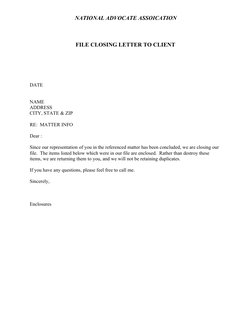
What an attorney case closing Template should accomplish
The primary purpose of a closing template is to create a reliable final checkpoint. A lawyer should be able to look at the completed record and determine why the matter is closed, what event brought the representation to an end, whether the client has received important documents, whether money remains to be accounted for, and whether any future action needs to be calendared. The template should make those questions visible rather than relying on memory or scattered notes.
A client-facing closing letter has a different role. It should communicate the status of the representation in plain language, identify the matter by a recognizable description or file number, summarize the result when appropriate, identify documents being returned, address the firm’s records policy, and distinguish completed legal work from matters that remain the client’s responsibility. It should not imply that the attorney will continue monitoring a matter after representation has ended unless that responsibility has actually been agreed upon.
An internal checklist can be more detailed than the letter. It may include billing review, trust-account reconciliation, confirmation that original documents were returned, confirmation that pleadings or orders were properly filed, removal from active calendars, storage classification, future review dates, and final attorney sign-off. The checklist can also preserve institutional knowledge by recording the reason for closure and the date on which the matter became inactive.

When a legal matter is actually ready to close
Closure should follow completion, not merely inactivity. A file that has been quiet for several weeks may still contain an unresolved deadline, an outstanding court order, an unpaid settlement obligation, an unreturned original document, or a post-judgment issue that requires attention. Before marking the matter closed, the responsible lawyer should review the file and determine whether any legal work remains within the agreed scope of representation.
For litigation, the closing review should consider the procedural endpoint. Depending on the matter, that could be a final judgment, dismissal, settlement, completion of the agreed post-settlement work, expiration of an appeal period, or another event that genuinely ends the engagement. The exact endpoint depends on the matter and governing law. A template should therefore provide a blank field for the closing event rather than assuming that every matter ends with the same document.
Transactional matters require a different review. A closing may depend on execution and delivery of final documents, recording, funding, payment, registration, delivery of certificates, or completion of agreed follow-up work. The lawyer should distinguish between a transaction being substantially complete and the lawyer’s contractual or professional responsibility actually ending. A closing form is strongest when it records the specific completion event instead of using an unexplained label such as “case closed.”
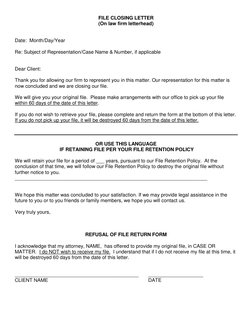
Core fields to include in the closing template
A practical template begins with identification information. Include the client name, matter name, internal file number, court or opposing party when relevant, responsible attorney, closing date, and the event that triggered closure. These fields prevent confusion when a client has several matters with the same firm. They also make the final record easier to retrieve years later.
The next group of fields should address substantive completion. A useful form can ask whether all agreed legal services were completed, whether final orders or instruments were received, whether required filings were made, whether settlement terms were completed to the extent covered by the engagement, and whether any known future obligation belongs to the client rather than the firm. A “remaining action” field is especially useful because it forces the reviewer to identify unresolved items instead of assuming that silence means completion.
Financial and property fields are equally important. The form can record the status of the final invoice, client funds, trust-account reconciliation, expense reimbursement, original documents, physical property, and materials returned to the client. It should also record the method and date of return where that information matters. Internal records should make it possible to establish that the firm considered these items before final closure.

Building the client closing letter
A strong client letter usually starts with a direct statement that the agreed representation concerning the identified matter has concluded. The wording should be specific enough that the client understands which matter is being closed. “Your case is closed” can be ambiguous when a client has several legal matters. A better structure identifies the matter, gives the completion event or result, and then explains the practical consequences of closure.
The next part should address documents and property. The letter can state which originals are enclosed or otherwise being returned, identify whether the firm is retaining a copy, and explain the firm’s records-retention approach in language appropriate to the jurisdiction. If a document must be collected, the letter should say how the client can obtain it. If another lawyer is taking over, the communication should identify the transition arrangement rather than suggesting that the prior attorney remains responsible.
The closing portion should identify any client-side follow-up that is genuinely important. For example, a client may need to comply with an installment obligation, preserve a judgment, renew a filing, meet a deadline, or obtain separate advice on a matter outside the engagement. These examples should be tailored to the actual case. The letter should not create a new duty or promise that the attorney will monitor developments after the representation has ended.
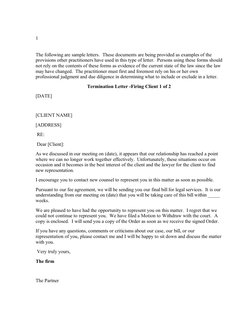
Sample attorney closing letter structure
A practical letter can use a simple sequence: date and client address; matter reference; statement of completion; brief description of the result; list of returned documents; explanation of records handling; any client action that remains; final billing or balance information; and a courteous closing. The precise language should be adjusted to the engagement and applicable professional rules. The structure matters more than copying a stock paragraph word for word.
For example, a hypothetical closing paragraph might state that the firm has completed the services described in the engagement, is closing its file for the matter, and is returning specified original documents. It could then identify one remaining client responsibility and provide a date or reference document if necessary. This is an example of organization, not a statement of what any particular jurisdiction requires.
A sample attorney closing letter to client should also avoid creating false certainty. If an appeal period, filing deadline, recording process, or third-party action remains outside the firm’s responsibility, the letter should say so accurately. Conversely, the lawyer should not use a generic closing letter to declare a matter complete when the firm still owes a procedural or contractual task.
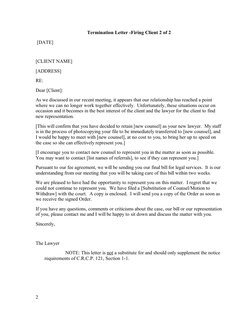
Closing checklist versus closing letter
The two documents work together but should not be confused. The closing checklist is primarily an internal control document. It asks whether each closing task has been completed and provides a place for dates, initials, or attorney review. The letter is primarily a client communication. It explains the end of the engagement and gives the client information about records, documents, money, and any remaining responsibilities.
A firm that uses only a letter can overlook internal tasks. A firm that uses only a checklist can leave the client uncertain about whether representation has actually ended. Combining both creates a clearer workflow. The checklist can be completed first, the attorney can approve closure, and the letter can then be sent with the appropriate documents or instructions.
This distinction also explains why a search for a case closing letter template may produce several different document types. Some resources are disengagement letters, some are file-retention notices, some are administrative checklists, and some are termination notices. The right choice depends on whether the matter ended normally, the client changed counsel, the attorney withdrew, or the firm is simply completing its administrative closure after successful representation.

File organization and records retention
Closing a file does not necessarily mean destroying it immediately. Retention requirements can vary by jurisdiction, matter type, agreement, court order, and the nature of documents in the file. A template should therefore avoid hard-coding one universal retention period unless the firm’s policy and applicable authority support it. Instead, it can include fields for the applicable retention category, scheduled review date, disposition date, and responsible person.
Original documents deserve particular attention. Wills, deeds, certificates, settlement instruments, signed agreements, identification documents, and other originals may require special handling. The closing review should identify what belongs to the client and confirm that it has been returned, delivered to an authorized successor, or stored under an arrangement that is actually appropriate. A general statement that “all documents were handled” is less useful than a record of what was returned and when.
Electronic files also need deliberate treatment. A closing procedure can identify the authoritative matter folder, confirm that duplicate or temporary materials have been handled under firm policy, preserve records that must be retained, and ensure that the closed matter is removed from active work queues. The goal is not simply to make a folder disappear from daily view; it is to establish a reliable record of the matter’s final status and future disposition.

Financial reconciliation before closure
Money should be addressed before the file is considered fully closed. The responsible lawyer or accounting staff should confirm whether the final bill has been issued, whether there are unbilled services, whether expenses remain outstanding, and whether any client funds are still being held. Where trust or client funds are involved, the applicable professional rules and accounting procedures should control the reconciliation.
A closing form can make financial review easier by separating several questions: final invoice status, outstanding balance, client funds held, funds due to the client, refunds or distributions, and accounting sign-off. This prevents a common administrative mistake in which the substantive legal work is complete but the financial side of the representation remains unresolved.
The letter should communicate financial information carefully. If a balance remains due, identify it accurately and consistently with the engagement agreement and applicable rules. If a refund is due, document the amount and method of payment. If no balance remains, a simple confirmation can reduce later uncertainty. The form should not use a generic financial statement when the firm’s accounting record contains more precise information.

State-specific considerations: California, Florida, and Texas
Searchers looking for an attorney case closing template california should understand that a generic national form may need adjustment. California’s professional rules address termination of representation, including reasonable steps to avoid reasonably foreseeable prejudice to the client and duties concerning client materials and property. A California form should therefore be reviewed against the current California Rules of Professional Conduct and any applicable tribunal rules before use.
The same principle applies to an attorney case closing template florida. Florida lawyers should review the current Florida professional-conduct rules, relevant court requirements, and any applicable firm policies before adopting language about file retention, client property, trust accounting, or termination. A form can organize the workflow, but it should not be presented as a universally mandated Florida form merely because it uses familiar legal terminology.
An attorney case closing template texas likewise needs jurisdiction-specific review. State Bar of Texas guidance on closing a law practice emphasizes communicating with clients, addressing active matters and deadlines, transferring files where appropriate, and preserving client records. Texas materials also discuss retention of client property and records. The practical lesson is that state-specific language should be placed in the firm’s controlled version of the template rather than assumed from a generic national sample.

Understanding PDF, Word, and printable versions
People searching for an attorney case closing template pdf often want a document that can be printed, archived, or circulated without changing its appearance. A PDF version can be useful as a controlled final record because the layout is generally stable. The important question, however, is not the file extension. The important question is whether the underlying content is current, jurisdictionally appropriate, and aligned with the firm’s closing procedure.
Searches for an attorney case closing template word generally reflect a different need: editing fields, adding firm-specific instructions, changing checkboxes, and adapting language to a particular practice area. An editable document can be useful during drafting, but firms should control versions carefully so that old language does not continue circulating after rules, retention policies, or internal procedures change.
Similarly, a request for an attorney case closing template free download signals a desire for a ready-to-use resource, but availability alone is not a quality test. A template should be evaluated for completeness, source reliability, date of publication, jurisdiction, treatment of client property, retention language, financial sections, and compatibility with the firm’s actual workflow. A professionally useful template is one that reduces omissions rather than merely saving drafting time.

What belongs in a final matter summary
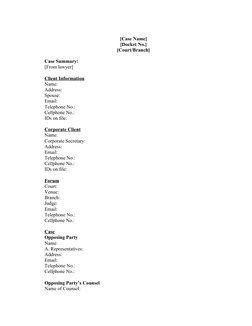
A final matter summary is particularly valuable for complex litigation and long-running representations. It can identify the parties, court, docket number, responsible attorney, major procedural events, final outcome, documents delivered, financial status, and future dates. The summary gives the firm a compact reference point without requiring someone to reopen the entire historical file just to understand how and why the matter ended.
The summary should remain factual. It can state that judgment was entered, settlement documents were executed, the client received specified originals, and the final invoice was reconciled. It should avoid unsupported conclusions or retrospective opinions that were never part of the representation. If a future legal issue may arise, the record should describe the known issue and any communication to the client without implying that the firm has undertaken ongoing monitoring.
This is where a closing form can become more useful than a simple letter. A letter communicates outwardly, while the final matter summary preserves institutional memory internally. Used together, they create a clear separation between client communication and firm records, making the closure process easier to audit and easier to understand when a former client returns years later.
How to handle future deadlines and residual obligations
One of the most important closing questions is whether anything remains after the legal work ends. Some matters generate future dates, such as judgment renewal, contractual expiration, filing renewal, payment milestones, or client obligations under a settlement. The firm should determine whether tracking that event is within the engagement. If it is not, the closing communication can identify the event so the client understands that responsibility has shifted to them.
A useful template therefore includes a section called something like “Future Dates or Client Responsibilities.” It can contain the date, event, source document, responsible party, and whether the firm has agreed to calendar or monitor it. This prevents the dangerous assumption that a matter’s closure automatically means all consequences of the matter have disappeared.
The distinction is particularly important in litigation. A final order may end one proceeding while leaving practical obligations, enforcement options, appeal considerations, or separate matters outside the firm’s engagement. The closing document should identify only those issues that are known and relevant. It should not become a substitute for a fresh legal assessment when circumstances change.

How closing language differs from attorney withdrawal
Normal completion and attorney withdrawal are not the same event. A normal closing generally means the agreed work has reached its intended endpoint. Withdrawal or termination can occur before that endpoint and may require additional procedural steps, client notice, court permission, or transition arrangements. A template should therefore ask the attorney to select the reason for closure instead of treating every matter as a successful completion.
Where a tribunal’s permission is required, the closing process should not assume that sending a letter alone ends the lawyer’s formal role. California rules, for example, address situations where tribunal permission is required and require reasonable steps to avoid foreseeable prejudice. Comparable requirements may exist elsewhere. The attorney should verify the applicable rules rather than relying on a generic template.
A withdrawal letter may also need to address successor counsel, pending deadlines, transfer of papers, final billing, and the client’s need to obtain new representation. The written record should be especially careful when the matter remains active. The goal is an orderly transition that protects the client while accurately documenting the end of the prior representation.

Case closing statements versus client closing letters
The phrase court case closing statement examples can refer to several different things, so it is important to define the intended document. A client closing letter is an administrative communication from counsel to the client. A closing statement in court can instead refer to an oral advocacy statement, a written procedural filing, or a financial statement depending on context. These documents should not be treated as interchangeable.
If the goal is to close the attorney-client file, the relevant document should focus on the end of representation and administrative completion. If the goal is to summarize the outcome of litigation, the final matter summary can capture the judgment, settlement, dismissal, or other endpoint. If the goal is courtroom advocacy, the lawyer needs a completely different structure focused on the evidence and legal arguments permitted by the proceeding.
Keeping these concepts separate makes the template more useful. A firm can maintain a client closing letter, internal closure checklist, and final case summary as three related but distinct records. Each document has a different audience and purpose, reducing the temptation to make one generic form perform every task.

Where an instructions to closing attorney form fits
The phrase instructions to closing attorney form is often associated with transactional or real-estate work rather than ordinary litigation file closure. Such a form may communicate instructions concerning documents, funds, recording, title matters, signing, disbursement, or other transaction-specific steps. It should not be substituted for a client matter closing checklist merely because both documents contain the word “closing.”
For a transactional practice, the closing workflow can connect the instruction form with the final matter record. The attorney can confirm that instructions were received, documents were executed, required filings were completed, funds were handled, and final copies were delivered. The closing checklist then records the completion of the legal engagement after those transaction-specific tasks have been addressed.
This separation is useful because the legal risk in a transaction often arises from details that are not relevant to a litigation closure letter. A carefully designed firm system can therefore have several specialized templates that feed into a common final closure procedure. The shared principles remain the same: identify the matter, confirm completion, protect client interests, document property and funds, communicate clearly, and preserve the appropriate records.

Common mistakes when closing a legal file
One common mistake is closing the file because the attorney believes the substantive dispute is over without checking administrative completion. A settlement may have been reached but documents may remain unsigned. A judgment may have been entered but an agreed filing may remain. A transaction may have closed but an original document may still be in the office. A closing checklist is valuable precisely because it requires these details to be considered separately.
Another mistake is using an old form without reviewing its legal assumptions. Retention periods, professional rules, court procedures, privacy expectations, and firm policies can change. A form that was accurate when created may become misleading later. Firms should identify the owner of the template, establish a review date, and make clear which language is firm policy and which language must be customized for the jurisdiction and matter.
A third mistake is overloading the client letter with internal terminology. The client generally needs a clear explanation of what has ended, what documents are being returned, what the firm will retain, and what the client needs to do. Internal codes, storage categories, accounting abbreviations, and workflow instructions usually belong in the firm’s internal record rather than the client-facing letter.

Practical Solution
The most practical solution is to build one controlled closing workflow around three documents: an internal closing checklist, a client closing letter, and a final matter summary. Start by reviewing the matter from beginning to end and identifying the exact event that permits closure. Then verify that all work within scope has been completed, all known deadlines have been handled or clearly assigned, all client property has been addressed, and all financial balances have been reconciled.
Next, complete the client communication. Identify the matter precisely, state that the representation has concluded, describe the result without unnecessary detail, list important documents being returned, explain records handling in accordance with the firm’s policy, and identify any material client responsibility that remains. Where another attorney will take over, document the transfer rather than relying on an informal conversation. Where the matter ended through withdrawal or termination, confirm that the applicable procedural requirements have been satisfied before treating the file as closed.
Finally, have the responsible attorney perform a documented final review. Record the closure date, retention category, future review date if appropriate, disposition instructions, billing status, and sign-off. If the firm uses an editable master template, maintain a controlled version and periodically compare its language with current professional rules and firm procedures. This approach turns the template from a static letter into a repeatable risk-management process that can be adapted for litigation, transactional work, estate matters, family matters, employment disputes, and other practice areas.
Suggested closing workflow for law firms
A consistent workflow can begin when the attorney determines that the matter has reached its substantive endpoint. The attorney or assigned staff member then performs a document review, checks the docket or transaction record, verifies final filings, checks billing and trust information, and identifies original documents. Only after those checks are complete should the matter move from active status to closed status.
The next stage is client communication and document delivery. The firm should use the appropriate closing letter, attach or transmit the documents that belong with it, and retain evidence of the communication according to firm policy. If the client has not provided a current address or delivery method, that issue should be resolved rather than silently ignored. The record should show what was sent and how.
The final stage is internal closure. The firm should apply the correct retention category, remove the matter from active task lists, preserve any future date that the firm has agreed to monitor, and obtain attorney approval. This creates a clean boundary between active representation and archived records. It also gives another lawyer or staff member enough information to understand the matter without reconstructing the entire file.

Adapting the template by practice area
Litigation practices generally need fields for court, docket number, judgment or dismissal, appeal status, settlement completion, opposing counsel, and future enforcement or renewal issues. Transactional practices may need execution, recording, delivery, funding, and post-closing obligation fields. Estate practices may need special attention to original instruments and long-term client records. Family-law matters may require particular care with continuing orders and obligations.
Personal-injury and contingency matters can benefit from a detailed financial section because settlement proceeds, liens, costs, medical claims, and distributions may require reconciliation before the file is closed. Employment matters may need fields for settlement compliance, confidentiality obligations, continuing restrictions, or delivery of personnel-related records. The template should remain modular so that irrelevant sections can be omitted without weakening the core closing controls.
The same principle applies to specialized state forms. Rather than maintaining one enormous document containing every possible rule, a firm can maintain a common core and add jurisdiction-specific modules. This keeps the primary closing workflow consistent while allowing California, Florida, Texas, or another jurisdiction to have its own language where professional rules or court procedures differ.
How to evaluate a template before adopting it
First, check whether the template clearly identifies the audience and purpose. A client letter should not be presented as an internal checklist, and an internal checklist should not be sent to a client without substantial editing. The document should also have enough space for matter identification, completion status, property, money, future dates, retention, and attorney review.
Second, inspect the legal assumptions. Look for specific retention periods, statements about file ownership, automatic destruction language, promises about future services, or claims that a particular procedure is mandatory. Those statements may depend on jurisdiction and matter type. A generic template should be rewritten wherever its language could be mistaken for a universal legal requirement.
Third, test the template against a realistic closed matter. Ask a staff member who was not responsible for the original work to follow the form. If that person cannot determine what was completed, what was returned, what remains, why the matter closed, or when the file should next be reviewed, the template is not doing enough. The best closing forms are easy to complete but difficult to complete carelessly.
Reference Examples
An attorney case closing Template is easiest to understand when viewed as part of a complete legal matter lifecycle rather than as a single letter. The strongest examples typically combine clear matter identification, a defined completion event, document-return information, financial status, retention instructions, and an attorney review point. Some examples emphasize the client-facing letter, while others emphasize the internal checklist or final case summary. Comparing those formats helps a firm decide which information belongs in communication with the client and which information should remain in the firm’s internal records. The visual references below illustrate several of these document structures and show how different legal offices organize closure information.
The following examples also help distinguish related documents that can otherwise be confused during a search for an attorney case closing Template . A closing letter communicates the end of representation, a disengagement letter can document the end of a relationship, a checklist verifies internal completion, and a case summary preserves a concise record of the matter. None should be adopted solely because it looks professional. Each should be reviewed against the firm’s workflow, the engagement agreement, applicable professional rules, and the particular circumstances of the matter. Use the examples as visual references for structure, organization, and document design rather than as universal legal forms.

File Closing Checklist for Attorneys
Source: Scribd
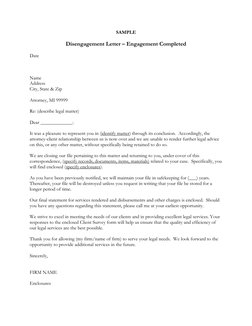
Disengagement Letter – Engagement Completed
Source: Scribd
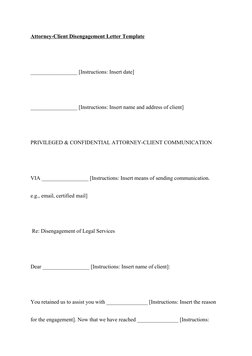
Attorney-Client Disengagement Letter Template
Source: Scribd
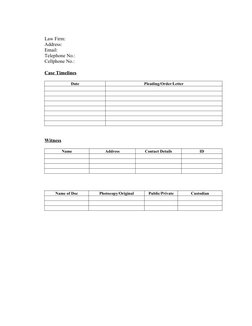
Case Summary Template and Format
Source: Scribd
File Management Checklist Page
Source: Scribd
Legal Office Records Table
Source: Scribd
Law Office Financial Worksheet
Source: Scribd
Client Matter Management Procedure
Source: Scribd
Legal Practice Records Checklist
Source: Scribd
