A soap manufacturer business plan Template should do more than describe attractive bars, fragrances, packaging, or a proposed brand. It should explain what will be produced, who will buy it, how production will work, what resources are required, how products will reach customers, and whether the financial model is commercially realistic. A well-structured plan turns a broad soap-making idea into a sequence of measurable decisions about products, capacity, sourcing, pricing, sales, operations, compliance, staffing, and cash management.
Research into current soap-business planning resources shows a consistent structure: executive summary, company overview, market analysis, product strategy, marketing and sales, operations, management, and financial planning. The exact depth should match the business model. A home-scale artisan producer needs a different operating model from a factory supplying retailers, hotels, distributors, or private-label customers.
The most useful way to use a template is as a decision framework rather than as a document to fill with generic statements. Every major assumption should connect to another part of the plan. If the production section says the facility can make a certain number of bars, the sales forecast should not quietly assume a much larger volume. If the marketing plan depends on wholesale accounts, the pricing model must allow for wholesale margins, packaging, freight, and payment terms.

What a soap manufacturer business plan should accomplish
The first purpose of the plan is to define the business clearly. State whether the company will manufacture bar soap, liquid soap, household cleaning soap, specialty soap, hotel soap, private-label products, or a combination. The plan should also explain whether the company will formulate products from raw ingredients, buy a prepared soap base, process soap noodles into finished bars, or outsource part of the production. Those choices affect equipment, labor, quality controls, capital needs, and regulatory responsibilities.
The second purpose is commercial validation. A good plan identifies a specific customer rather than relying on a vague statement that everyone uses soap. Potential customers may include individual consumers, supermarkets, specialty retailers, hotels, salons, spas, institutions, wholesalers, distributors, or other brands seeking contract manufacturing. Each segment can require different pack sizes, prices, certifications, delivery schedules, minimum quantities, and sales methods.
The third purpose is financial discipline. Soap businesses can look attractive when only ingredient costs are considered, but the real cost structure may include rent, utilities, equipment maintenance, packaging, quality testing, labor, rejected batches, inventory losses, transportation, sales commissions, marketing, taxes, financing costs, and working capital. A business plan should make those costs visible before production is scaled.

Core sections to include in the template
Executive summary
The executive summary should be concise but commercially meaningful. Identify the proposed company, product category, target customers, location, business model, competitive positioning, production approach, sales channels, funding requirement if applicable, and the main financial objective. Although it appears first, it is normally easier to write after the other sections have been completed because the summary should reflect the actual plan rather than an early assumption.
A strong summary should also identify the central opportunity. For example, a hypothetical manufacturer might focus on mid-sized hospitality businesses that want locally produced guest soap in consistent branded packaging. The opportunity is not simply “selling soap”; it is supplying a defined customer group with a product specification, ordering process, production schedule, and service proposition that competitors may not match.
Avoid unsupported claims such as guaranteed demand, guaranteed margins, or guaranteed market leadership. Instead, describe what has been validated and what remains an assumption. If customer interviews, trial orders, distributor discussions, or pilot production have occurred, distinguish those observations from projections. This makes the plan more credible because the reader can see which elements are evidence and which are targets.
Company description and business model
The company description should explain ownership, location, legal structure, manufacturing model, mission, and long-term direction. It should also clarify whether manufacturing is intended to serve a house brand, wholesale customers, private-label customers, contract customers, or several channels. A manufacturing company may generate revenue from finished-product sales, contract manufacturing, packaging services, formulation work, or combinations of these models.
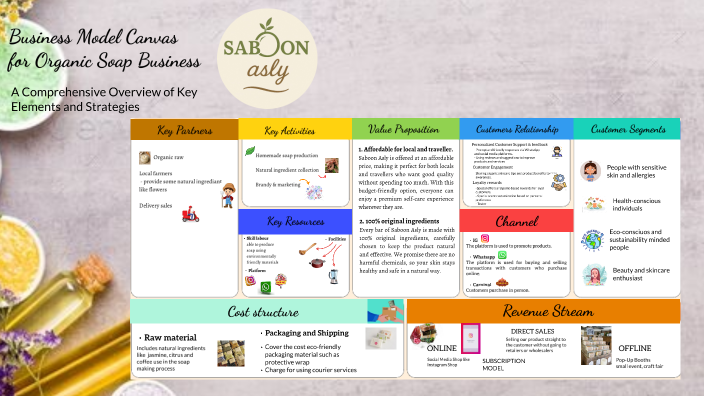
Describe the business model in operational terms. A private-label manufacturer, for example, may need minimum production quantities, artwork approval, formula specifications, batch records, packaging procurement, and delivery coordination. A direct-to-consumer artisan producer may instead emphasize a small number of repeatable formulas, distinctive packaging, seasonal releases, and controlled production batches.
Do not allow the company description to become a branding essay. The reader needs to understand how the company earns revenue and what resources are necessary to deliver the promised product. A simple one-page business model summary can therefore be useful before the detailed sections begin.
Market analysis for a soap manufacturing plan
Market analysis should begin with customer segmentation. Separate retail consumers from commercial buyers and distinguish premium, mass-market, specialty, institutional, and private-label demand where appropriate. For each segment, document the problem the buyer is trying to solve. A hotel buyer may prioritize consistency, delivery reliability, pack size, branding, and cost per guest. A specialty retailer may place more emphasis on formulation story, packaging, ingredients, shelf presentation, and wholesale margin.
Competitor research should examine more than retail price. Compare product formats, weights, ingredients, fragrances, packaging, minimum order quantities, distribution channels, brand positioning, delivery expectations, and visible claims. For a manufacturer, production capability can itself become a competitive factor. A company able to produce several consistent pack sizes or small private-label batches may compete differently from a large factory optimized for very high volumes.
Competitive analysis should also identify substitutes and barriers to entry. A new producer may compete against established soap brands, local artisans, contract manufacturers, imported products, and other cleansing products. A structured framework such as SWOT or competitive-force analysis can help convert observations into strategic decisions rather than simply listing competitors. Business-plan references for soap makers commonly include market analysis, competitive analysis, marketing strategy, operations, and financial planning as connected sections. :contentReference[oaicite:2]{index=2}

Product strategy and manufacturing scope
A practical plan should define the initial product range before estimating production capacity. List each proposed product, format, net weight, packaging type, target customer, expected selling channel, and formulation status. A small manufacturer may be better served by a focused range of several core products than by launching dozens of variants that create excessive raw-material and packaging inventory.
Product specifications should include the characteristics that must remain consistent from batch to batch. Depending on the product, these may include weight, shape, color, fragrance, texture, moisture characteristics, packaging dimensions, label information, and other quality parameters. The plan should identify which specifications are controlled internally and which require external testing or specialist review.
The manufacturing method must match the product strategy. Industrial bar-soap finishing lines can involve mixing, milling, extrusion or plodding, cutting, stamping, cooling, conveying, and packaging. Smaller operations may use substantially different equipment and batch methods. The business plan should therefore avoid selecting machinery simply because it looks impressive; equipment should be justified by required capacity, product characteristics, available space, maintenance capability, utilities, and projected demand.

Raw materials and soap making business supplies
A realistic plan should create a raw-material specification for every product. Depending on the manufacturing method, this may include oils or fats, soap noodles or prepared bases, alkalis, water, fragrances, colors, functional additives, preservatives where appropriate, and packaging materials. The plan should identify approved suppliers, expected lead times, minimum purchasing quantities, storage requirements, and contingency suppliers for important inputs.
For a small producer, the phrase soap making business supplies can cover much more than ingredients. Weighing equipment, mixing vessels, molds, cutting equipment, racks, protective equipment, cleaning tools, packaging materials, labels, storage containers, and batch-record materials can all affect the cost and repeatability of production. These items should appear in the startup budget or operating budget instead of being treated as miscellaneous purchases.
Supplier selection should consider consistency as well as price. A lower-priced ingredient that varies significantly between batches may create formulation problems, quality complaints, or production waste. A useful procurement section records supplier specifications, certificates or documentation where relevant, expected delivery times, payment terms, and the procedure for approving a substitute ingredient.

Production process and facility planning
The operations section should show how raw materials become finished products. A simplified flow might run from receiving and inspection to storage, weighing, mixing or processing, forming, cutting, curing or cooling where applicable, quality checks, packaging, finished-goods storage, and dispatch. The exact sequence depends on the chosen soap process and should be documented in operating procedures before commercial production begins.
Facility planning should reduce unnecessary movement and cross-contamination risks while providing sufficient room for raw materials, work-in-process goods, finished products, packaging, cleaning activities, and maintenance. The plan should also consider ventilation, drainage, electrical requirements, water supply, waste handling, emergency arrangements, and safe chemical storage. These considerations become especially important when caustic materials are handled.
Production capacity should be expressed in a way that can be connected to sales. For example, instead of simply stating that a machine can process a certain quantity per hour, calculate realistic output after setup time, cleaning, changeovers, maintenance, curing or cooling constraints, packaging speed, labor availability, and downtime. A nominal machine capacity is not automatically the same as sellable monthly production.

Process flow and equipment selection
Industrial bar production can use a sequence in which soap material is mixed, refined through a mill, formed through a plodder, cut into bars, stamped or shaped, and then packaged. Equipment suppliers describe such sequences as integrated finishing lines, but the actual configuration should be selected according to the intended product and output level rather than copied from a generic factory design.
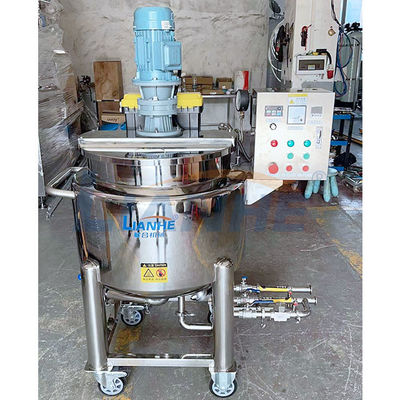
For liquid soap, mixing tanks and filling equipment become central to the production model. The business plan should specify tank capacity, mixing characteristics, filling format, container sizes, cleaning requirements, and expected batch turnaround. A smaller manufacturer may deliberately choose semi-automatic equipment to preserve capital, while a larger operation may justify automation when volume and labor economics support it.
Maintenance deserves its own line in the financial model. Pumps, mixers, conveyors, cutters, filling machines, heaters, chillers, compressors, and packaging systems all require inspection and servicing. The plan should identify critical spare parts, maintenance intervals, supplier support, and what happens if a key machine is unavailable.
Quality control and safety
Quality control should be designed into the production plan rather than added after a problem occurs. Define what is checked when materials arrive, what is monitored during production, what is inspected before packaging, and what records are retained for each batch. A batch record can connect ingredient lots, quantities, equipment, processing dates, packaging materials, operator checks, deviations, and release decisions.
Safety is especially important when sodium hydroxide or potassium hydroxide is part of the process. These materials are caustic and can cause serious chemical burns. Poison Control recommends appropriate protective equipment, ventilation, and secure storage, while Michigan State University guidance likewise emphasizes eye protection, gloves, ventilation, suitable materials, and adding lye to water rather than water to lye.
A business plan should therefore budget for suitable protective equipment, training, chemical storage, emergency procedures, ventilation, spill-response materials, and documented operating procedures. The precise legal and occupational requirements depend on the country and facility, so general soap-making guidance should not be treated as a substitute for local regulatory or safety advice.

Packaging, labeling, and brand positioning
Packaging belongs in the business plan because it affects product cost, logistics, shelf presentation, damage rates, storage space, and customer perception. Compare individual wrappers, cartons, bottles, pouches, bulk containers, and multipacks according to the sales channel. A premium retail bar may need very different packaging from a bulk institutional product even when the underlying soap is similar.
Label planning should begin early. Determine what information must appear for the intended market and product category, and distinguish mandatory information from optional marketing language. Avoid making therapeutic or performance claims unless the formulation, evidence, and regulatory pathway support them. The wording used on a package can affect how a product is classified and what obligations apply.
Brand positioning should connect directly to the target customer. A plan may emphasize botanical ingredients, fragrance variety, hospitality supply, local production, sensitive-skin positioning, sustainability, value pricing, or private-label flexibility. The strongest position is one the operation can actually deliver consistently rather than a slogan that the production system cannot support.

Sales and marketing strategy
The marketing section should identify how customers will discover the brand and how those prospects will become paying customers. Possible channels include direct retail, specialty stores, distributors, hotels, salons, spas, institutional buyers, trade events, marketplaces, business-to-business outreach, and private-label partnerships. Each channel should have its own pricing and fulfillment assumptions.
For wholesale sales, calculate the economics from the customer’s perspective. Retailers need sufficient margin, predictable deliveries, attractive packaging, clear product specifications, and manageable minimum quantities. Distributors may require additional margin and logistics support. Direct sales may offer higher revenue per unit but can require more marketing, customer service, packaging, and fulfillment work.
Marketing targets should be measurable. Instead of writing that the company will “increase awareness,” define targets such as qualified wholesale leads, sample requests, repeat-order rate, average order value, conversion rate, or monthly active accounts. A business plan can then compare planned performance with actual results and adjust production or marketing spending accordingly.

Pricing and unit economics
Pricing should begin with a complete unit-cost calculation. Include ingredients, direct packaging, direct labor, production losses, labels, and any variable processing costs. Then account for fixed overhead separately. This makes it easier to understand contribution margin and prevents a product from appearing profitable merely because the calculation excludes rent, utilities, administration, equipment depreciation, or sales costs.
Build separate scenarios for direct retail, wholesale, distributor, and private-label sales where applicable. The same bar can have different economics across channels because the selling price, packaging requirements, order quantity, freight, commissions, and payment terms change. A manufacturer should know the minimum viable price for each channel before negotiating with buyers.
Use sensitivity analysis to test important assumptions. Ask what happens if oil prices rise, packaging costs increase, production is 20 percent below plan, wholesale orders arrive later than expected, or a major customer is lost. A resilient plan should show which variables have the greatest effect on cash flow and profit rather than presenting one overly precise forecast.

Financial plan and funding requirements
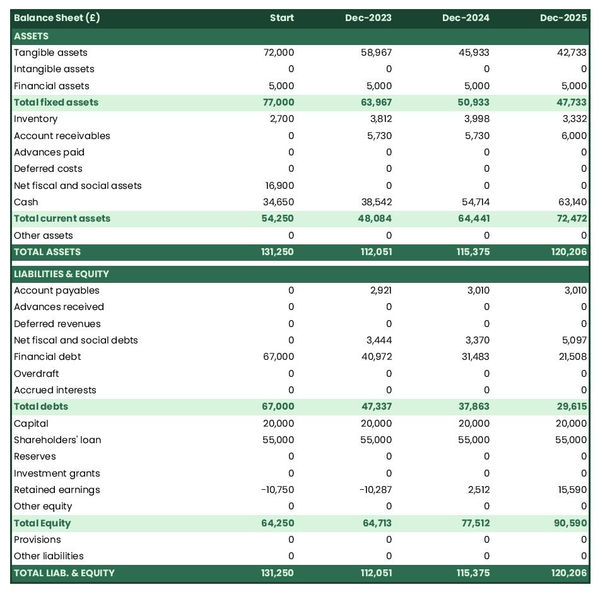
The financial section should normally include startup costs, sales assumptions, cost of goods sold, operating expenses, projected profit and loss, cash flow, balance sheet assumptions, capital expenditure, and break-even analysis. If financing is requested, explain the amount, intended use, repayment assumptions where relevant, and the working-capital reserve required during the ramp-up period.
Startup costs should distinguish capital purchases from recurring expenses. Equipment, facility improvements, molds, production systems, storage fixtures, and certain setup costs may be treated differently from ingredients, packaging, utilities, payroll, freight, and marketing. The accounting treatment will depend on the business and jurisdiction, so the plan should remain consistent with professional accounting advice.
Cash flow deserves particular attention. A profitable business can still experience a cash shortage when it purchases raw materials before receiving customer payments. This is especially important for wholesale or contract manufacturing, where payment terms may create a gap between production spending and revenue collection. Financial planning resources for soap manufacturers commonly emphasize cash flow, balance sheets, revenue forecasts, and other linked financial statements.
How to start a soap business plan without making the document generic
If you are researching how to start a soap business plan, begin with the product and customer rather than the template itself. Write a one-page concept containing the proposed products, target buyers, selling channels, production method, location, expected capacity, and competitive advantage. Then challenge every assumption. If you cannot explain why customers would choose the product, the market section needs more work. If you cannot estimate the cost per finished unit, the operations and purchasing sections need more work.
The next step is to map the production process from incoming material to finished shipment. This reveals hidden requirements such as storage, curing racks, weighing stations, quality checks, packaging space, and dispatch areas. It also provides the basis for estimating labor and production time. Current soap manufacturing references show that production lines can combine mixers, mills, plodders, cutters, stamping equipment, conveyors, chillers, and packaging machinery depending on the product and scale.
Finally, connect the operational model to the financial model. If the facility is designed around a particular batch size, the forecast should use realistic batch frequency and selling volume. If the business intends to serve wholesale customers, include the inventory and payment-cycle requirements. If the company will launch with a narrow product range, make the purchasing and production plan reflect that discipline instead of assuming immediate expansion.

Choosing the right business code for soap making
The phrase business code for soap making should not be treated as one universal code because classification depends on the product and jurisdiction. In Indonesia, the OSS classification system distinguishes activities within the soap, detergent, cleaning-product, perfume, and cosmetics grouping. Under KBLI 2025, OSS identifies 20231 as “Industri Bahan dan Produk Pembersih” and separately lists 20232 for human cosmetics. The older KBLI 2020 structure also identifies 20231 for household soap and cleaning products.
That distinction matters because a household cleaning product, bathing soap, and cosmetic product can have different regulatory treatment. Before finalizing a business registration, identify the actual product category, claims, manufacturing activity, and intended market, then confirm the appropriate current classification through the relevant official system or qualified local adviser. Do not copy a code from an unrelated soap business simply because the product name appears similar.
The business plan should record the selected classification as a planning assumption and explain why it matches the proposed activity. It should also identify any additional permits, standards, product registrations, facility requirements, or certifications that may apply to the chosen category. This keeps the legal section connected to the operational and financial sections instead of treating compliance as an isolated checklist.

How to evaluate template formats and resource searches
Searches such as soap manufacturer business plan template free, soap manufacturer business plan template free download, soap manufacturer business plan template pdf, and soap manufacturer business plan template word often indicate that the reader wants a ready-made structure rather than a blank sheet of paper. The important question is not merely the file format. Check whether the material actually covers manufacturing operations, market analysis, production costs, staffing, working capital, sales channels, and financial assumptions.
Other searches may include soap manufacturer business plan template free pdf, soap manufacturer business plan template excel, and soap manufacturer business plan template word free. These formats can be useful for different purposes: a PDF can help with reference and presentation, a Word-style document can support narrative editing, and a spreadsheet can support calculations. The underlying assumptions matter more than the file extension, and a template should never be treated as evidence that its example numbers apply to your business.
When comparing resources, look for transparent assumptions, editable financial logic, realistic manufacturing sections, clear market segmentation, and enough space to document operational risks. A polished-looking template with unsupported revenue projections is less useful than a simpler structure that forces the owner to explain production capacity, pricing, inventory, customer acquisition, and cash requirements.

Practical Solution
The practical solution is to build the plan in layers. First, write the one-page business model: product range, target customer, manufacturing method, location, sales channels, and value proposition. Second, build a product-cost sheet for each core SKU. Third, create a production-capacity model based on realistic batch sizes, processing time, labor, changeovers, curing or cooling, packaging, and expected downtime. Fourth, connect that capacity to a sales forecast. Only after those steps should you finalize the executive summary.
For an entrepreneur researching how to start a soap business plan, a useful working sequence is to validate demand, define three to five initial products, identify reliable suppliers, document the manufacturing workflow, price each product by channel, estimate startup capital, and model monthly cash flow. The plan should then be tested against downside scenarios. If a modest drop in sales causes an immediate cash crisis, the solution may be to reduce equipment spending, narrow the product range, negotiate supplier terms, increase working capital, or stage the expansion rather than simply increasing the sales forecast.
If the goal is a small manufacturing operation, start with equipment that supports the validated product range and capacity requirement. If the goal is a larger factory, create a phased capital plan that separates essential production equipment from later automation. This prevents the common mistake of purchasing a complete production line before the market has demonstrated enough demand to support it. Production equipment should be selected using measurable requirements for throughput, product quality, maintenance, utilities, footprint, and operator safety.
The final practical step is to turn the business plan into a management system. Review actual sales against forecast, material usage against standard cost, production yield against target, inventory against demand, receivables against payment terms, and cash against the monthly plan. Update the assumptions when evidence changes. A business plan becomes much more valuable when it continues to guide purchasing, production, pricing, sales, and investment decisions after launch.

Common mistakes to avoid
One common mistake is confusing market size with achievable sales. A large soap market does not mean a new manufacturer can immediately capture a meaningful share. The plan should instead estimate sales from identifiable customers, sales channels, production capacity, price points, and conversion assumptions.
Another mistake is underestimating working capital. Raw materials and packaging may need to be purchased before production, while finished products may sit in inventory until customers order them. Wholesale customers may also pay after delivery. A cash-flow forecast should therefore include the timing of purchases, production, inventory holding, invoicing, collections, and major capital expenditures.
A third mistake is treating quality and compliance as secondary issues. Inconsistent weights, packaging defects, formulation variation, inadequate records, unsafe chemical handling, or unsupported product claims can create operational and commercial problems. The plan should establish responsibilities, records, inspection points, training, and escalation procedures before the business grows.

Reference Examples
A soap manufacturer business plan Template is easiest to evaluate when the reader can compare its structure with real examples of financial models, production systems, packaging formats, and soap product presentations. The following visual references illustrate several of those planning dimensions without implying that any one example is the correct model for every manufacturer. Financial charts can help explain how revenue, costs, assets, and cash flow fit together, while production visuals can clarify the equipment and workflow assumptions that belong in an operations section.
These references are intended to help readers recognize the difference between a narrative business plan and a practical manufacturing plan. A useful document connects product design to production requirements, production requirements to costs, costs to pricing, pricing to sales channels, and sales channels to cash flow. When evaluating a template, use the visuals as prompts for questions: What equipment would this model require? What capacity is realistic? What packaging is appropriate? Which customers would buy it? Which assumptions need local validation?
Soap Business Plan Financials
Source: FinancialModelsLab
Soap-Making Production Line Machinery
Source: Alibaba

Soap Bar Packaging Line
Source: Ambebi

Profit and Loss Account Statement for Soap Business Plan
Source: SlideTeam

Automatic Soap Packaging Machine
Source: TradeIndia
GMP Liquid Soap Production Line
Source: Made-in-China
Automatic JS-250 Soap Wrapping Machine
Source: FullAutoPack

Soap Kettle Mixing Vat
Source: Orange Page
Dual Vacuum Screw Soap Plodder Machine
Source: Made-in-China
Soap and Detergent Manufacturing Process 03
Source: Wikimedia Commons
