The best sales outlines are more than collections of headings. They connect commercial goals to target customers, positioning, sales channels, activities, resources, timelines, and measurable outcomes. A useful template should be detailed enough to prevent important omissions while remaining flexible enough to work for a startup, local business, B2B organization, professional service firm, ecommerce company, or established sales department.
This guide explains how to build, customize, present, and maintain a sales outline. It covers the difference between a sales outline and a broader business plan, the information worth collecting before writing, the sections that deserve the most attention, common document formats, practical examples, reporting methods, and a repeatable workflow for turning a template into an actionable plan.
What Is a Business Sales Outline Template?
A business sales outline template is a structured framework for documenting a company’s sales objectives, target market, sales strategy, activities, responsibilities, resources, performance measures, and implementation schedule. It functions as a starting point rather than a finished strategy. The actual content should reflect the company’s products, customers, sales cycle, competitive position, financial objectives, and available resources.
An outline is particularly valuable because sales planning involves several connected decisions. A revenue goal affects the number of customers required. The number of customers affects pipeline requirements. Pipeline requirements influence prospecting activity, staffing, territory coverage, marketing support, and technology. A well-designed outline makes those relationships visible instead of treating each decision as an isolated task.
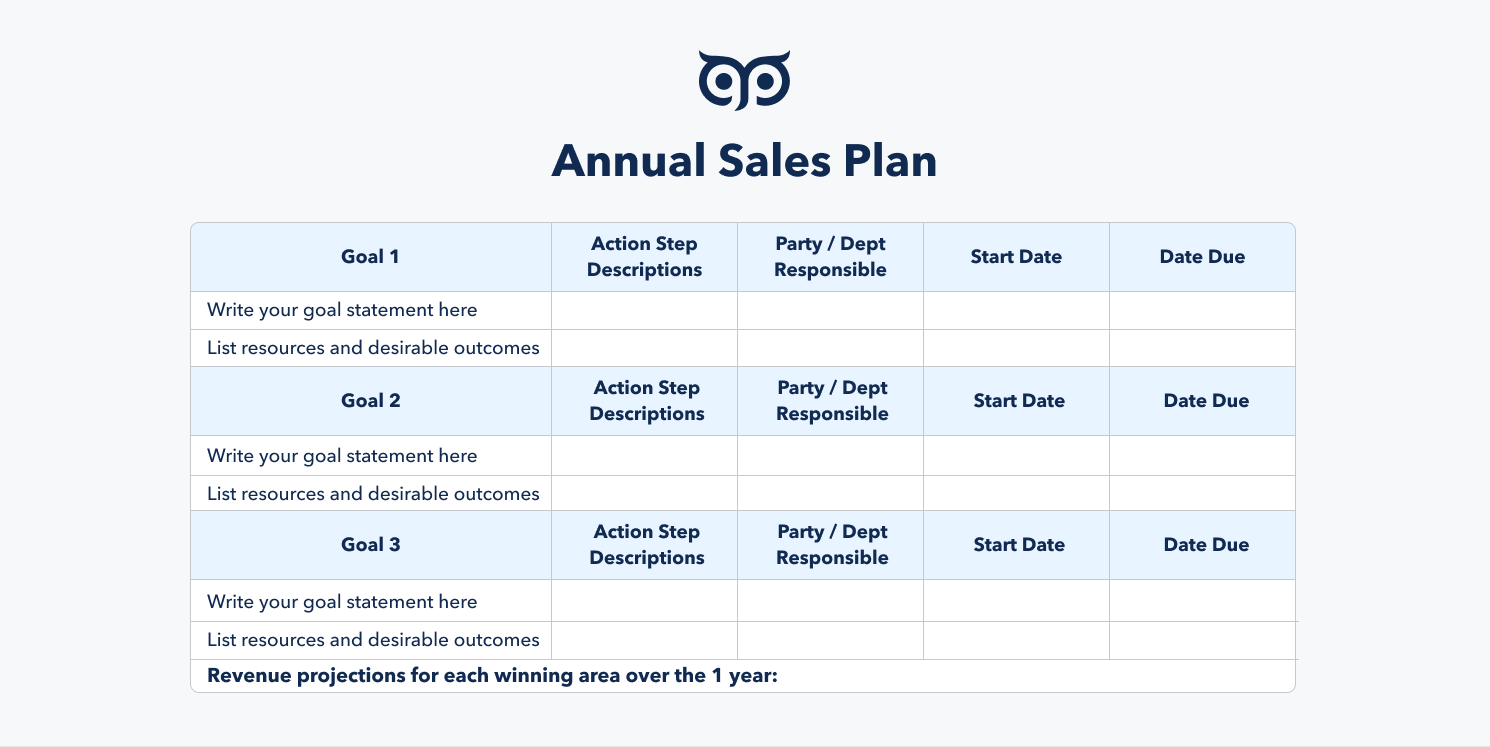
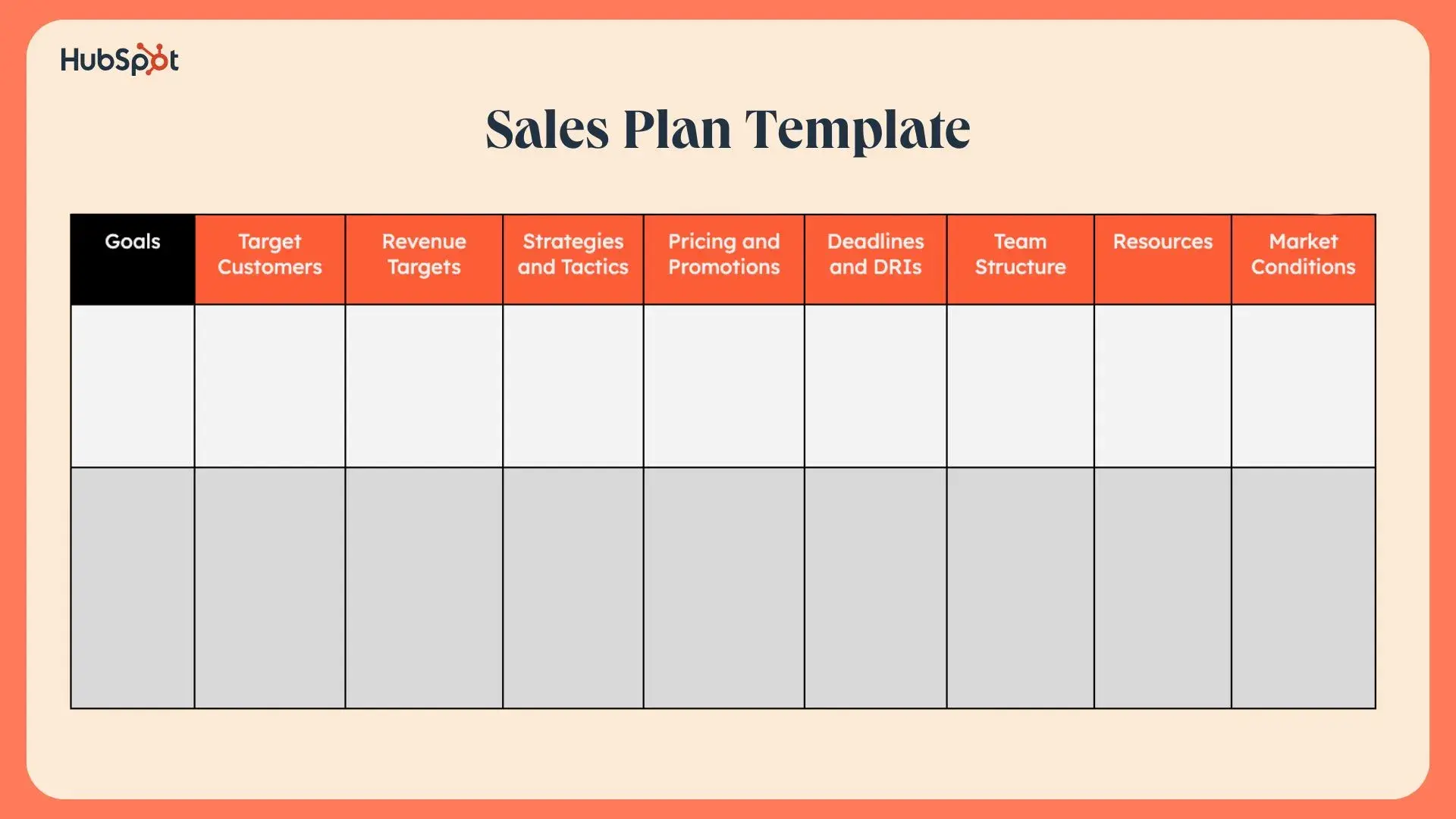
Sales outlines can be created as a short one-page strategy, a detailed annual planning document, a spreadsheet, a presentation, a working document, or a combination of these formats. The right format depends on how the document will be used. Leadership may need a concise summary, while sales managers may need detailed tables for quotas, pipeline stages, activities, owners, deadlines, and forecasts.
A useful template should also distinguish between strategy and execution. Strategy answers questions such as who the business wants to serve and why customers should choose it. Execution answers questions such as which accounts will be contacted this week, which representative owns each opportunity, when follow-up occurs, and what metric determines whether the activity is working.
The goal is therefore not to produce the longest possible document. The goal is to create a document that makes decisions easier, responsibilities clearer, and performance easier to inspect. A concise outline with accurate assumptions and clear ownership is generally more useful than a long plan filled with unsupported projections or generic statements.
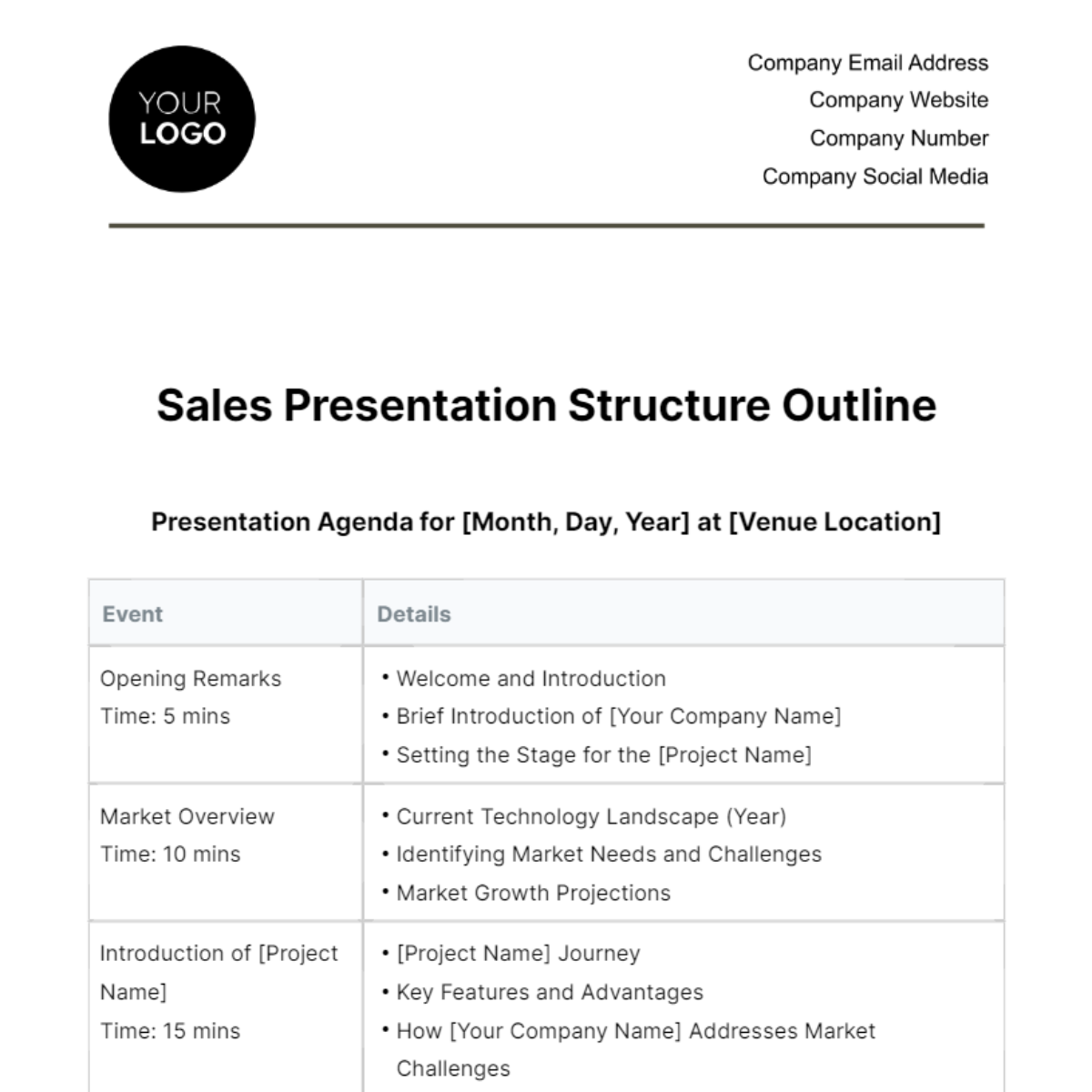
For visual planning, a structured sales presentation can help teams turn the written outline into a discussion document. An effective presentation usually moves from context and market conditions to customer needs, value proposition, sales strategy, execution priorities, targets, and next steps.
Why a Sales Outline Matters
Sales teams often have access to large amounts of information but still struggle with prioritization. Customer lists, CRM records, historical sales, marketing reports, product information, and forecasts can exist in different systems. An outline brings the most important commercial decisions into one framework and provides a shared reference for the people responsible for execution.
One of its main benefits is alignment. A sales representative should understand what the organization is trying to accomplish, which customer segments matter most, what qualifies an opportunity, and which activities have priority. Marketing should understand the audience and messages sales expects to use. Leadership should understand the assumptions behind the revenue target and the resources required to achieve it.
A sales outline also creates accountability. Each major initiative can have an owner, deadline, success measure, and supporting activity. This makes it easier to identify whether a problem comes from insufficient activity, poor lead quality, weak conversion, unrealistic pricing, an ineffective sales process, inadequate resources, or a target that was not grounded in evidence.
Another benefit is consistency. Without a common structure, individual managers may describe goals differently or use different definitions for pipeline stages and performance. A template can establish a shared vocabulary. It can also make quarterly or annual reviews faster because teams compare the same categories from one planning period to another.
Finally, a sales outline is useful because it can be revised. A sales plan should not be treated as a document that is written once and ignored. Customer behavior, competitive conditions, pricing, product availability, staffing, and pipeline quality can change. The outline should provide enough structure to support consistency while allowing the strategy to evolve when evidence changes.
The Core Components of a Business Sales Outline Template
A comprehensive outline normally starts with an executive summary, followed by the business context and sales objectives. From there, it should explain the target market, ideal customers, competitive environment, positioning, sales channels, prospecting approach, sales process, activities, team responsibilities, resources, budget, metrics, timeline, risks, and review process.
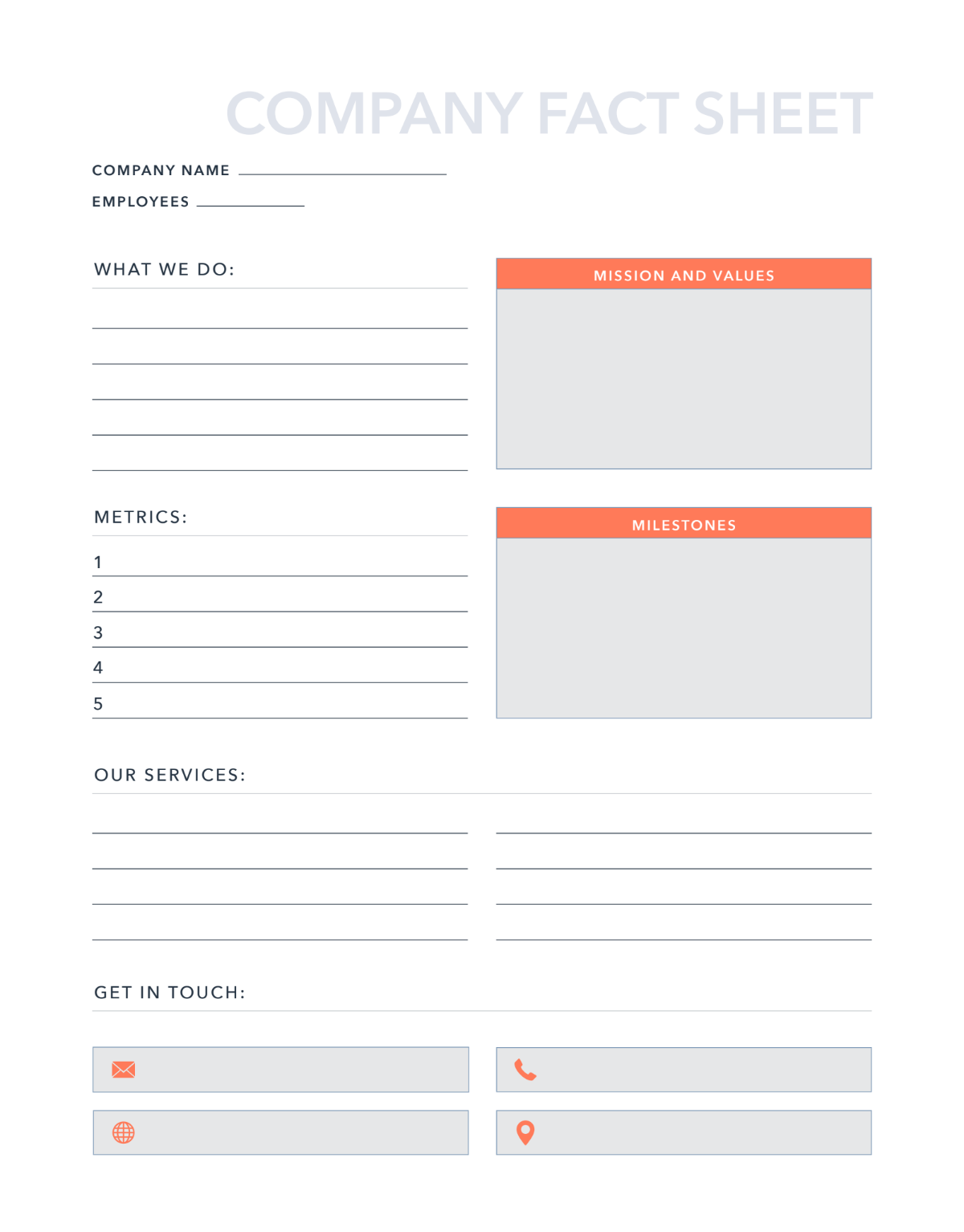
The executive summary should be short but specific. It can identify the planning period, principal revenue objective, major customer segments, primary sales strategy, expected priorities, and the most important assumptions. A manager should be able to read this section and understand the commercial direction without reading every supporting table.
The business context explains why the plan exists. Include the products or services being sold, current market position, important customer characteristics, recent performance patterns, competitive considerations, and strategic priorities. Avoid turning this section into a general company history. Only include information that changes the sales strategy or helps readers interpret the targets.
The target-market section should define who the sales organization intends to reach. Useful dimensions can include industry, company size, geography, use case, purchasing behavior, customer maturity, business problem, budget range, and buying authority. The purpose is to turn a broad audience into identifiable groups that can be prioritized and approached differently.
Customer research should also capture motivations and barriers. Demographic or firmographic information may tell a team who the buyer is, but it does not necessarily explain why the buyer will act. Pain points, business consequences, buying triggers, objections, desired outcomes, and decision criteria are often more useful for developing sales messaging and qualification standards.
Revenue Goals and Sales Targets
Revenue targets should be specific enough to guide action. A plan might distinguish between total revenue, new-customer revenue, expansion revenue, recurring revenue, average deal value, number of new accounts, retention objectives, or product-specific targets. The appropriate measures depend on the business model and should reflect how revenue is actually generated.
A useful target structure connects the desired result to the activity required to produce it. For example, a hypothetical B2B company might set a quarterly new-business target of $300,000. If its typical closed deal is $30,000, the team needs roughly ten wins. If its historical qualified-opportunity-to-close rate is 25 percent, it would need approximately forty qualified opportunities to support that target, subject to changes in deal quality and sales-cycle length.
That example illustrates why targets should not exist as isolated numbers. A sales manager can work backward from revenue to wins, opportunities, qualified leads, conversations, and prospecting activity. The further the plan moves upstream, the more important it becomes to use historical performance or clearly stated assumptions rather than arbitrary activity quotas.
Targets should also be segmented when different products, territories, or customer groups behave differently. A mature enterprise account may require fewer opportunities but longer sales cycles, while a transactional product may require high activity volume and fast conversion. One company-wide average can hide these differences and produce misleading expectations for individual representatives.
When historical data is limited, label forecasts as assumptions rather than facts. A new business might estimate conversion rates using pilot activity, comparable internal campaigns, or conservative scenarios. Maintaining separate conservative, expected, and aggressive cases can be more useful than presenting one projection with false precision.

Target Customers and Ideal Customer Profile
A sales plan becomes more actionable when it defines the ideal customer precisely. For a B2B organization, an ideal customer profile might include industry, annual revenue range, employee count, operating geography, technology environment, business model, likely pain points, and purchasing complexity. For a consumer business, the profile may instead emphasize customer needs, behavior, purchase frequency, preferences, and price sensitivity.
The profile should not be confused with a fictional persona. An ideal customer profile describes the characteristics of an account or customer who is especially suitable for the business. A buyer persona can then describe the specific person involved in evaluating, approving, influencing, or using the purchase.
Good segmentation helps the sales team decide where to spend time. A business may technically be able to sell to many customer types, but that does not mean all prospects deserve equal attention. The outline should therefore identify primary segments, secondary segments, and segments that are currently low priority.
Qualification criteria should be linked to these segments. A qualified prospect might need a particular business problem, authority to purchase, a realistic budget, an appropriate implementation timeline, or a strong product fit. Qualification should be based on observable evidence rather than optimism about an attractive account.
Customer information should also be reviewed periodically. The most profitable customer today may not remain the most attractive customer after pricing changes, product expansion, competitive shifts, or changes in service costs. A living customer profile helps the sales plan remain connected to commercial reality.

Value Proposition and Positioning
The value proposition explains why a target customer should consider the company’s offer. It should connect a customer problem or desired outcome to a credible business benefit. Generic claims such as “high quality,” “excellent service,” or “innovative solution” are rarely enough unless they are supported by a meaningful distinction.
A practical outline can separate the value proposition into four parts: the customer problem, the proposed solution, the measurable or observable benefit, and the reason the customer should believe the claim. This structure helps sales representatives develop consistent messaging without forcing them to deliver identical scripts.
Positioning should also address alternatives. The buyer may be comparing the company with a competitor, an internal process, a spreadsheet, a cheaper supplier, a more established provider, or the option of doing nothing. A strong plan recognizes those alternatives and explains where the offer is genuinely stronger.
Pricing belongs in this conversation because price is part of positioning. The plan should document the intended pricing logic, discount boundaries, packaging, contract structure, or promotional approach where relevant. It should also explain when discounting is appropriate and when it risks undermining the value proposition.
Sales representatives should be able to translate positioning into customer language. Rather than memorizing marketing slogans, they need a practical explanation of the problem solved, the outcomes created, the evidence available, and the circumstances in which the product may not be the best fit.

Building the Sales Process Into the Outline
A sales process defines the major stages an opportunity passes through. Common stages include prospecting, qualification, discovery, presentation or demonstration, proposal, negotiation, closing, onboarding, and follow-up. The exact stages should reflect the organization’s actual buying process rather than copying terminology from another company.
Each stage should have an entry condition and an exit condition. For example, an opportunity should not move from qualification to proposal merely because a representative has spoken with the prospect. A stronger definition might require confirmation of the business problem, relevant stakeholders, buying process, commercial fit, and an agreed next step.
Stage definitions improve forecasting because they reduce subjective pipeline labels. If one representative considers an opportunity “qualified” after a short call while another requires documented buying intent, a pipeline report can become misleading. Clear criteria make the data more comparable.
The outline should also record expected activities for each stage. Discovery may require specific questions, stakeholder mapping, needs analysis, or technical validation. A proposal stage may require pricing approval, legal review, implementation planning, or procurement information. These activities make the process operational instead of theoretical.
Finally, define what happens when an opportunity stops progressing. A stalled opportunity might be recycled, placed into nurture, returned to an earlier stage, or closed as lost. Clear rules prevent inactive opportunities from remaining in the pipeline indefinitely and distorting forecasts.

Prospecting Strategy
Prospecting should explain how the organization will create new opportunities. Potential channels include referrals, outbound calling, email, events, partnerships, social selling, content, paid acquisition, search, account-based activity, communities, and existing-customer expansion. The plan should identify which channels matter most and why they fit the target audience.
Channel selection should consider economics as well as reach. A channel that generates many leads is not necessarily valuable if those leads rarely become qualified opportunities. Conversely, a smaller channel may deserve investment if its prospects have strong fit, high deal values, and reliable conversion.
Prospecting activities should be defined at an appropriate level. A plan might specify weekly account research, personalized outreach, referral requests, discovery calls, product demonstrations, or partner meetings. Avoid turning the outline into a list of arbitrary activity quotas unless the organization has enough evidence to justify them.
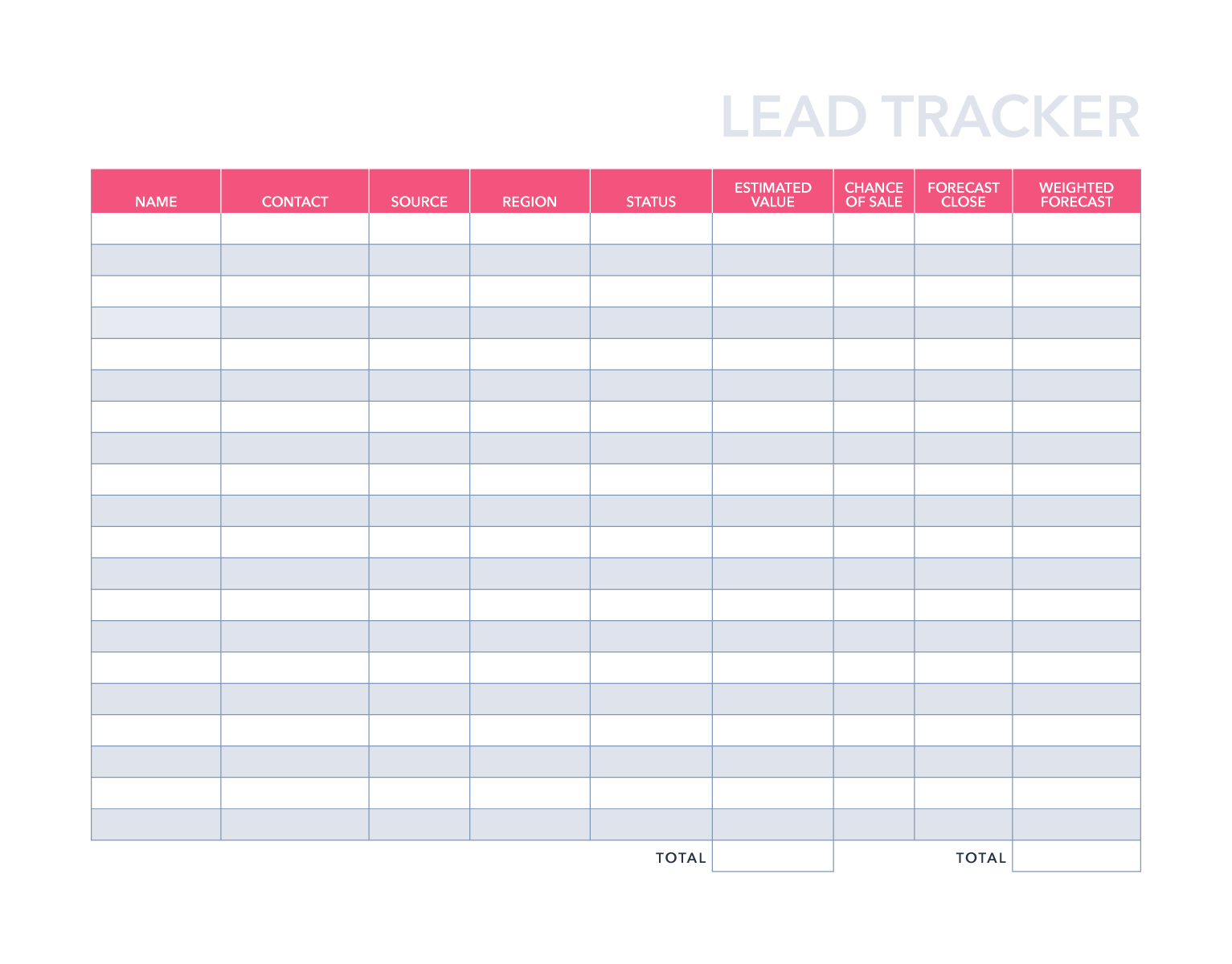
Lead sources should be tracked consistently. Recording where opportunities originated makes it possible to compare source quality later. Useful fields can include source, campaign, segment, representative, date created, qualification status, opportunity value, outcome, and reason for loss.
Prospecting should also have a feedback loop. If sales repeatedly receives poorly matched leads, the solution may not be “work harder.” The organization may need to change audience targeting, messaging, qualification criteria, landing pages, offers, or channel allocation. A good sales outline makes this feedback responsibility explicit.
Sales Activities, Ownership, and Timeline
A strategy becomes executable when every major initiative has an owner. Ownership should be assigned to a role or named person depending on the organization’s size. It should be obvious who is responsible for completing an activity, who approves it, and who needs to be consulted.
Timelines should use meaningful milestones. Instead of writing “improve prospecting,” the plan could state that the team will test two outbound sequences during the first month, review response and qualification rates at the end of the test, and decide which sequence becomes the standard process.
Action items should be prioritized. A useful plan separates must-do activities from optional experiments. This matters because sales teams have finite capacity. If everything is labeled urgent, representatives and managers have no practical method for deciding what to do first.
The timeline should also account for dependencies. A product launch may depend on pricing approval, training, collateral, inventory, implementation capacity, or legal review. A territory expansion may depend on hiring and onboarding. Mapping these dependencies prevents the sales team from being held accountable for outcomes that require support from other functions.
Review dates are just as important as launch dates. The plan should specify when performance will be reviewed, what data will be examined, and who will make changes. Monthly or quarterly review cycles can be useful, while fast-moving teams may need weekly operational reviews alongside broader quarterly planning.

Choosing the Right Sales Plan Format
There is no universal best format for a sales outline. A document works well for narrative strategy and management review. A spreadsheet is stronger for calculations, targets, pipeline data, and scenario analysis. A presentation works well for communicating the strategy to executives or a wider sales organization.
A one-page format is appropriate when the main goal is alignment. It might contain the revenue objective, priority segments, strategic choices, top initiatives, owners, key metrics, and review cadence. It is not intended to replace detailed operating data; instead, it gives the organization a compact strategic reference.
A longer document is useful when the sales motion is complex. Enterprise selling, multiple regions, several product lines, partner channels, or long implementation cycles may require more explanation. The document can include appendices for detailed assumptions, research, account lists, forecasts, or supporting analysis.
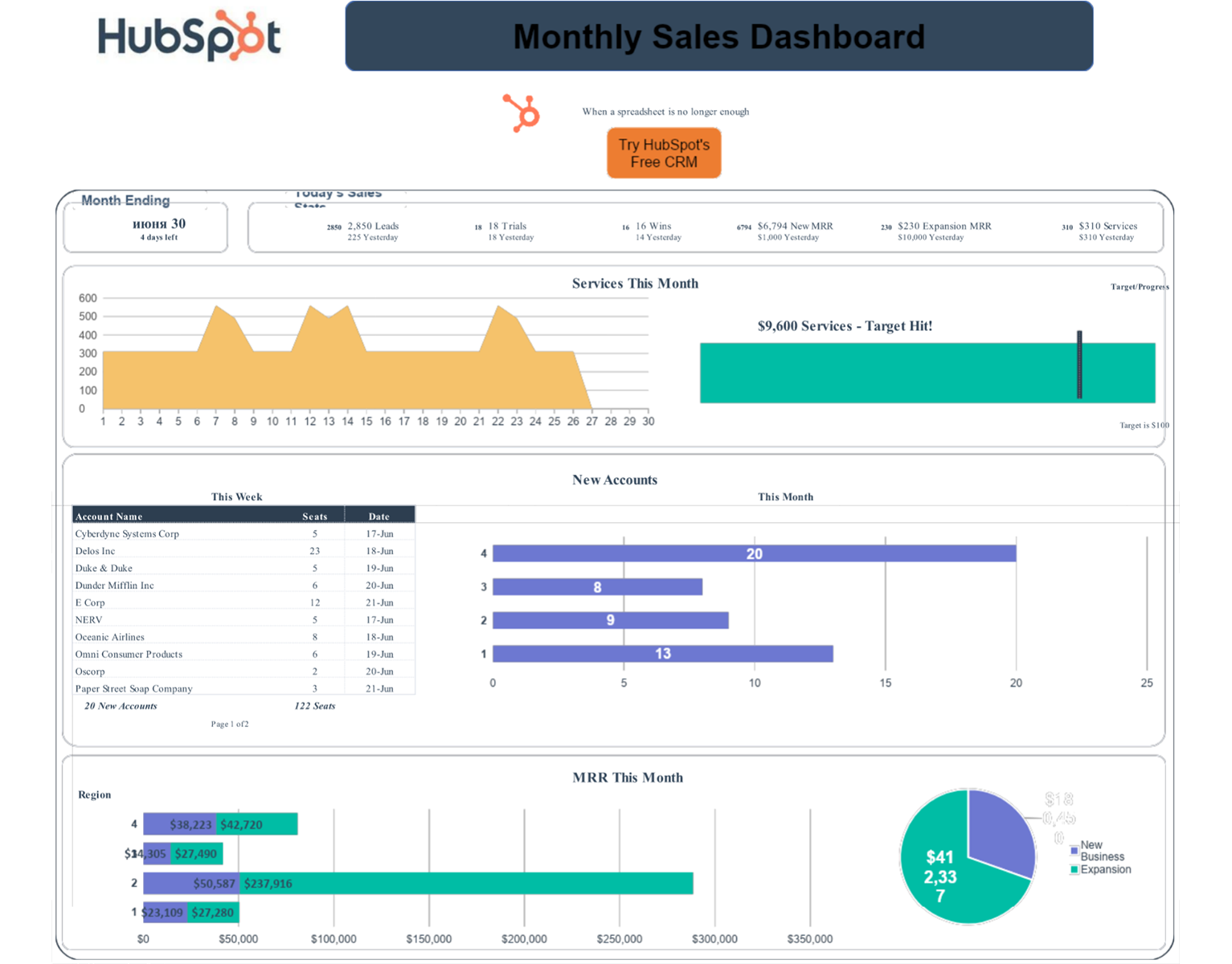
Spreadsheets are especially useful for quantitative components. They can track monthly targets, actual revenue, product-level performance, opportunity stages, weighted pipeline, close dates, and activity levels. The important point is to keep definitions consistent and prevent the spreadsheet from becoming a disconnected reporting system.
Presentations should focus on decisions rather than displaying every piece of data. A sales presentation outline should tell a coherent story: current situation, opportunity, target customer, strategic response, sales model, targets, execution plan, risks, and decisions required from leadership.

When to Use a Word Document
A word-processing document is useful when the plan requires narrative explanation. It works well for an annual sales strategy, a management proposal, a new-market plan, or a document that will be reviewed and annotated by several stakeholders.
The strength of a document is its ability to explain reasoning. For example, if the organization is reducing focus on one customer segment, the plan can explain the evidence behind the decision, the expected effect, the transition process, and the risks involved.
Tables can be used for targets, ownership, timelines, and metrics without forcing the entire plan into spreadsheet form. A document can also contain a concise executive summary followed by detailed sections for readers who need more context.
However, a document should not become a static substitute for operational data. If representatives need daily pipeline information, that information generally belongs in the CRM or working spreadsheet rather than being manually copied into an annual planning document.
Use the document as the strategic layer and connect it to operational systems where possible. This separation keeps the plan readable while allowing the underlying numbers and activities to remain current.

When to Use Excel or Another Spreadsheet
A spreadsheet is valuable when the sales plan depends heavily on calculations. Revenue targets can be divided by month, product, territory, or representative. Forecasts can be compared with actual performance. Opportunity data can be weighted by probability, and scenarios can be modeled without rewriting the narrative plan.
A useful spreadsheet structure separates input data from calculations and summaries. Raw opportunity records should not be mixed indiscriminately with management dashboards. Clear tabs or sections can reduce accidental changes and make the model easier for others to understand.
Use consistent data validation wherever possible. Sales stages, regions, product names, opportunity status, and loss reasons should use controlled values. Inconsistent labels such as “Closed Won,” “Won,” and “Closed-Won” can create inaccurate summaries.
Spreadsheets should also document assumptions. If a forecast uses an assumed close rate, average deal size, or growth percentage, record the assumption near the calculation. This allows another manager to understand how the forecast was constructed rather than treating the output as an unexplained number.
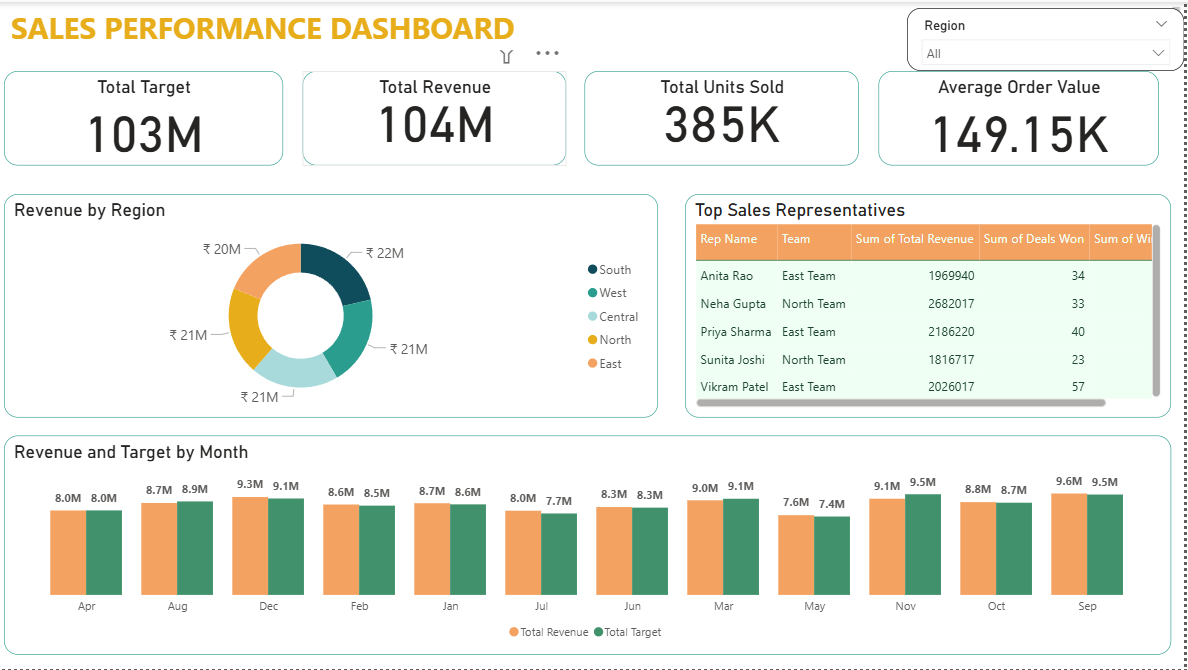
Finally, use spreadsheets for analysis rather than decoration. A visually attractive workbook that does not answer important management questions is less valuable than a simple workbook that clearly shows target, actual, variance, pipeline coverage, and the actions required to close the gap.
How to Research Before Completing the Template
The quality of a sales outline depends on the quality of the information used to build it. Before writing the final plan, collect historical sales data, customer information, pipeline records, product information, pricing details, market observations, competitor information, customer feedback, and input from the sales team.
Start with internal data because it provides direct evidence about the organization’s own commercial performance. Examine revenue by customer, product, territory, representative, acquisition source, and time period when the data is reliable enough to support those comparisons.
Review wins and losses rather than looking only at revenue. Lost opportunities can reveal pricing problems, product gaps, slow response times, poor qualification, weak positioning, procurement barriers, or competitors that are winning for specific reasons.
Interview sales representatives because quantitative data rarely explains every cause. Reps can identify objections that appear repeatedly, customer questions that marketing materials do not answer, segments that seem attractive but rarely close, and operational obstacles that prevent otherwise good opportunities from progressing.
Customer research should be used carefully. Conversations, surveys, support records, reviews, interviews, and account-management notes can reveal recurring needs and objections. Avoid treating a small number of comments as proof of a universal market trend; use them as signals that should be tested against broader evidence.
Competitive and Market Analysis
Competitive research should focus on decisions rather than producing a long list of competitor facts. Identify the alternatives customers actually consider, how those alternatives are positioned, where they appear stronger, and where your organization can credibly differentiate.
Pricing research should be interpreted carefully because advertised prices may not represent the final commercial terms. Compare packaging, implementation, service levels, contract conditions, support, functionality, and switching costs when those factors influence purchasing decisions.
Market analysis should also consider changes that could affect demand. New technology, regulations, customer budgets, distribution models, economic conditions, or changes in buyer expectations may create opportunities or risks. The sales plan should translate those observations into specific implications.
For example, if customers are becoming more cautious about large upfront commitments, a business might test smaller entry packages, phased implementation, or usage-based pricing. That is more useful than merely writing “market conditions are uncertain” in the plan.
The research section should distinguish evidence from assumptions. A manager reading the plan should be able to tell which conclusions are supported by historical performance or customer research and which are strategic hypotheses that need testing.

Sales Metrics and Reporting
Metrics should answer management questions. Revenue tells you what happened financially, but it may not explain why. Pipeline value, opportunity count, conversion rate, average deal size, sales-cycle length, win rate, retention, expansion, and activity measures can provide additional context.
Choose metrics based on the decisions the team needs to make. If the problem is insufficient pipeline, the team may need to monitor qualified opportunities and source quality. If the pipeline is healthy but revenue is weak, conversion, deal size, pricing, or sales-cycle metrics may deserve greater attention.
Use both leading and lagging indicators. Revenue is a lagging outcome. Qualified meetings, opportunities created, proposal activity, and stage progression can provide earlier signals. A strong plan connects these indicators rather than assuming that more activity automatically creates more revenue.
Reports should also show variance. A target of $100,000 is difficult to interpret without actual revenue, expected close dates, current pipeline, and the assumptions behind the forecast. Comparing planned versus actual performance helps managers identify where intervention is necessary.
Do not overload dashboards with every available metric. A useful management view should make important exceptions visible quickly. More detailed operational reports can remain available for deeper investigation when a problem is identified.

Example KPI Framework
Consider a hypothetical subscription software company preparing a quarterly sales outline. Its management team might monitor new qualified opportunities, pipeline value, opportunity-to-close rate, new recurring revenue, expansion revenue, average sales cycle, and churn.
The team could then connect each metric to an action. A decline in qualified opportunities might trigger additional prospecting. A strong pipeline with weak conversion might trigger call reviews and qualification changes. A growing sales cycle might trigger stakeholder mapping or proposal-process improvements.
Metrics should have owners. If nobody owns a metric, nobody is clearly responsible for investigating changes. Ownership does not necessarily mean the person controls the result; it means the person is responsible for monitoring the metric and coordinating the response.
Reporting cadence should match the speed of the sales cycle. A business with short transactions may need daily or weekly operational monitoring, while a business with long enterprise contracts may rely more heavily on weekly pipeline reviews and monthly or quarterly forecast analysis.
Keep definitions stable across reporting periods. Changing the meaning of “qualified opportunity” halfway through a quarter can make comparisons meaningless. If a definition must change, document the change and explain how it affects historical comparisons.

Practical Examples of Sales Outline Structures
A small local service business might need only a few pages. Its outline could contain an annual revenue goal, target customer groups, referral strategy, local marketing channels, sales process, monthly activity goals, service capacity, budget, and a simple performance dashboard.
A B2B company selling to larger organizations would normally need more detail. Its outline might include account segmentation, buying committees, opportunity qualification, sales stages, territory assignments, account plans, proposal procedures, procurement considerations, implementation resources, and forecast methodology.
An ecommerce company may organize its plan around product categories, traffic sources, conversion rates, average order value, repeat purchase behavior, promotions, customer acquisition economics, and seasonal demand. Its sales outline may therefore look very different from an enterprise account plan even though both aim to increase revenue.
A professional services firm may focus on utilization, project capacity, lead sources, proposal conversion, average project value, referral partnerships, cross-selling, and client retention. The plan should reflect the firm’s capacity constraints because selling work that cannot be delivered can create operational problems.
A new company without extensive historical data can use scenarios instead of pretending to know future performance. Its outline might contain conservative, expected, and ambitious cases, each with assumptions for customer acquisition, conversion, pricing, sales cycle, and capacity.
Hypothetical B2B Example
Imagine a fictional software company that sells workflow automation to mid-sized manufacturers. Its annual goal is $1.2 million in new revenue. The company decides to focus on manufacturers with repetitive administrative processes, a dedicated operations team, and enough transaction volume to justify automation.
The company identifies operations directors and finance leaders as common stakeholders. Its value proposition focuses on reducing manual work, improving process visibility, and creating a more consistent workflow. The plan does not promise a universal financial result because the actual benefit depends on the customer’s process and implementation.
The prospecting strategy uses targeted account research, referrals, educational webinars, and personalized outreach. Opportunities move through defined stages from initial qualification to discovery, solution validation, commercial proposal, negotiation, and closed-won or closed-lost status.
Management reviews pipeline coverage weekly and revenue performance monthly. If a large number of opportunities remain stuck between discovery and proposal, the manager investigates whether the problem is unclear requirements, insufficient stakeholder access, weak demonstrations, pricing, or another cause.
This example demonstrates how the outline connects market definition, positioning, activity, process, metrics, and management action. The value is not the fictional numbers; the value is the logic linking the sections together.

How to Create the Template Step by Step
Step one is to define the planning period. Decide whether the document covers a month, quarter, six months, year, product launch, territory expansion, or another specific period. The time horizon determines the level of detail and the type of forecast that makes sense.
Step two is to gather the evidence. Pull historical sales, pipeline data, customer information, product details, pricing, market observations, competitive research, and relevant operational constraints. Do not begin by filling every template field from memory.
Step three is to define the outcome. Write the revenue objective and supporting sales goals. Then work backward to determine the number and type of customers, opportunities, and activities required. If the math does not look realistic, revise the assumptions before writing the final strategy.
Step four is to define the audience. Identify the customer segments that deserve priority and document their needs, buying triggers, objections, and decision process. This section should influence the sales message and qualification criteria.
Step five is to select the strategy. Choose the channels, sales motions, offers, partnerships, territories, account priorities, and customer-development methods that will be used. State what the team will deliberately not prioritize when that choice matters.

Turning Strategy Into an Action Plan
Step six is to convert strategy into initiatives. Each initiative should have an objective, owner, deadline, expected output, supporting resources, and success measure. For example, “improve outbound prospecting” is too vague; “test two account-specific outreach sequences with a defined group of target accounts and review qualified responses after four weeks” is actionable.
Step seven is to assign resources. Document required people, training, sales tools, CRM configuration, marketing support, content, product assistance, travel, events, and budget. A strategy that requires resources that do not exist should be treated as incomplete.
Step eight is to define the reporting system. Identify which data comes from the CRM, spreadsheet, finance system, marketing platform, customer-support system, or another source. Specify who updates it and when. This prevents reporting responsibility from becoming an afterthought.
Step nine is to define risks and contingencies. Consider what happens if the pipeline is below plan, conversion falls, a major account delays its decision, hiring takes longer than expected, a competitor changes pricing, or product availability becomes constrained.
Step ten is to schedule the review. Decide when the team will compare actual performance with the outline, what decisions will be made during the review, and how changes will be recorded. This turns the document into a management system rather than a one-time planning exercise.
Common Mistakes to Avoid
One common mistake is starting with the template instead of the business problem. A blank template can encourage people to fill fields mechanically. Begin with the decisions the sales organization needs to make, then use the template to organize those decisions.
Another mistake is setting revenue targets without checking the underlying pipeline and conversion assumptions. A target can be strategically desirable but operationally unrealistic. If the gap is intentional, the plan should identify which assumptions must change to close it.
Overly broad target markets are another problem. “Small businesses” or “companies that need software” rarely provide enough direction. A useful segment definition should help representatives recognize which accounts deserve attention.
Plans can also become too activity-focused. Calls, emails, meetings, and proposals matter, but activity is not the ultimate objective. The plan should connect activity to quality, progression, conversion, customer value, and revenue.
A final common mistake is failing to update the plan. A sales outline that does not reflect current market conditions, customer feedback, product changes, or pipeline reality becomes less useful over time. Schedule updates as part of the original planning process.

Best Practices for Maintaining a Sales Outline
Keep the strategic document stable enough to preserve direction but flexible enough to reflect evidence. Major changes should be documented rather than silently replacing the original assumptions. This creates a useful record of what the team expected, what actually happened, and why the strategy changed.
Use version dates and clear ownership. Even a simple “updated quarterly” label can prevent confusion about whether people are working from the latest version. The owner should be responsible for coordinating updates, not necessarily for entering every piece of data personally.
Connect the outline to operating meetings. Pipeline reviews, forecast meetings, territory planning, and quarterly business reviews should refer back to the goals and assumptions in the plan. This keeps the document connected to actual management behavior.
Use exceptions to drive conversations. If revenue is below target, do not simply highlight the shortfall. Identify whether the problem is insufficient pipeline, poor conversion, smaller deal sizes, delayed closes, customer churn, capacity, or another factor.
Finally, keep a record of lessons learned. At the end of each planning period, document which assumptions were accurate, which were wrong, which activities produced quality opportunities, and which initiatives should be stopped. These observations make the next planning cycle faster and more informed.

Practical Solution
The most practical way to use a business sales outline template is to treat it as a five-layer system: goals, customers, strategy, execution, and measurement. Complete those layers in that order so that every downstream decision has a reason behind it.
First, write the business outcome in measurable terms. Specify the planning period, revenue objective, customer-growth objective, and any important retention or expansion objective. Then work backward through the economics to estimate the required wins, opportunities, and activity.
Second, identify the customers most likely to produce that outcome. Define the priority segment, ideal customer characteristics, buyer roles, problems, buying triggers, objections, and reasons the customer might choose an alternative. Remove segments that do not fit the current strategy.
Third, document the commercial strategy. Explain the value proposition, positioning, pricing approach, sales channels, prospecting methods, qualification standards, sales stages, and customer-expansion strategy. Every strategic choice should connect to a customer need or business constraint.
Fourth, build an action table with initiative, owner, deadline, required resources, expected result, and measurement method. Review the table with the people responsible for execution and remove activities that cannot realistically be completed with available capacity.
Fifth, establish the measurement routine. Decide which numbers are reviewed weekly, monthly, and quarterly. Create clear definitions for pipeline stages and performance metrics. Make sure every important number can be traced to a reliable source.
Sixth, create a short management version. Condense the full plan into a one-page summary containing the objective, priority customers, core strategy, major initiatives, key metrics, owners, and review dates. This becomes the version executives and cross-functional partners can use for quick alignment.
Seventh, create the working version. Store detailed pipeline assumptions, account lists, forecasts, activity plans, and calculations in the appropriate operational system. Do not overload the strategic document with information that changes every day.
Eighth, schedule a formal review. A practical review should ask four questions: Are we achieving the outcome? Are the assumptions still credible? Which part of the sales process is limiting performance? What specific action will we take next?
This workflow turns a template into a repeatable management tool. It also makes the plan easier to audit because every major recommendation can be connected to a goal, customer insight, activity, metric, or assumption.
Reference Examples
The following examples are selected to illustrate the different document, planning, presentation, spreadsheet, customer, and sales-process concepts discussed in this guide. They are visual references rather than claims that every business should use the same format.
business sales outline template free
Source: Template.net
business sales outline template pdf
Source: HubSpot
business sales outline template google docs

Source: Canva
business sales outline template free download
Source: GetProspect
business sales outline template word
Source: HubSpot
business sales outline template excel
Source: HubSpot
business sales outline template word document
Source: HubSpot
sales business plan sample outline
Source: SketchBubble
email outline template for sales
Source: HubSpot
business sales presentation outline
Source: Template.net
business sales plan template
Source: HubSpot
sales business plan template free tips
Source: Act!
Frequently Asked Questions
What should a business sales outline template include?
A useful template should normally include an executive summary, business context, sales objectives, target customers, customer needs, positioning, sales strategy, prospecting approach, sales process, activities, ownership, resources, budget, KPIs, timeline, risks, and review cadence. The exact sections should be adapted to the business model and sales cycle.
How long should a sales outline be?
There is no universal ideal length. A simple business may need a few pages, while a complex enterprise sales organization may need a detailed document plus spreadsheets and supporting schedules. The best test is whether the outline contains enough information to guide decisions without burying important priorities in unnecessary detail.
Should a sales plan be different from a business plan?
Yes. A business plan normally covers the broader organization, including its model, operations, finances, market, and strategic direction. A sales plan concentrates on how the organization will acquire, convert, retain, and expand customers. The two should support each other rather than duplicate one another.
Is a spreadsheet better than a Word document for sales planning?
Neither is universally better. A Word-style document is stronger for strategy, explanations, and management review, while a spreadsheet is stronger for calculations, forecasts, targets, and structured operating data. Many organizations benefit from using both, with the document holding the strategy and the spreadsheet or CRM holding changing operational information.
What should be measured in a sales plan?
Start with metrics that directly support the plan’s objectives. Depending on the business, these can include revenue, new customers, expansion, retention, average deal size, pipeline value, conversion rate, win rate, sales-cycle length, qualified opportunities, and selected activity measures. Avoid tracking numbers that do not lead to a meaningful management decision.
How often should a sales outline be updated?
The strategic document can be reviewed monthly or quarterly depending on how quickly the market and sales cycle change. Operational data should usually be updated much more frequently. The important point is to establish a review cadence before the plan is launched so that updating it becomes part of normal management practice.
Can a new business create a sales plan without historical sales data?
Yes. A new business can use market research, pilot results, customer interviews, pricing tests, comparable internal activity, and scenario assumptions. The key is to distinguish estimates from observed performance. Conservative, expected, and ambitious scenarios can help founders understand how changes in conversion, deal size, or acquisition activity affect the outcome.
What makes a sales outline actionable?
Actionability comes from specificity. Each important initiative should have a clear objective, owner, deadline, required resources, and success measure. The plan should also connect activities to customer segments and revenue goals. If a reader cannot determine what should happen next, who should do it, and how success will be judged, the outline needs more operational detail.
Conclusion
A well-built business sales outline template is a practical bridge between commercial ambition and daily execution. The strongest version starts with measurable goals, identifies the customers most likely to support those goals, explains the value proposition and sales strategy, defines the activities and owners required for execution, and establishes a reporting system that makes problems visible early. Use the template as a living management framework rather than a static document, and keep assumptions, responsibilities, metrics, and review dates clear enough that the sales team can act on them. I can generate a companion sales-plan visual right now—which style should I use: clean corporate, modern infographic, or spreadsheet-style?
