Construction site noise control is an important part of managing a safe, productive, and responsible construction project. Heavy machinery, drilling, demolition, generators, compressors, trucks, and other construction activities can produce significant noise. Without proper planning, excessive noise may affect workers, nearby residents, visitors, and surrounding businesses.
Effective noise management does not necessarily mean stopping noisy construction activities. Instead, it involves identifying major noise sources, selecting appropriate control measures, scheduling disruptive work carefully, and monitoring sound levels when necessary. A well-planned approach can reduce unnecessary disturbance while allowing construction work to continue efficiently.
What Is Construction Site Noise Control?
Construction site noise control refers to the methods used to reduce, manage, and monitor unwanted sound generated by construction activities. The objective is to keep noise at reasonable levels while protecting workers and minimizing disruption to people near the project.
A construction noise control plan may address equipment selection, machinery maintenance, work schedules, barriers, worker protection, communication with neighbors, and noise monitoring. The exact requirements can vary depending on the location, project type, local regulations, and surrounding environment.
Why Construction Noise Control Matters
Construction noise can affect a project in several ways. Workers exposed to excessive noise may have difficulty communicating, hearing warning signals, or concentrating on tasks. Prolonged exposure to high noise levels can also create occupational hearing risks.
Noise can also affect people outside the construction site. Nearby homes, schools, offices, hospitals, and other sensitive locations may be disturbed by loud or prolonged construction activities.
Good construction site noise control can help a project:
- Reduce unnecessary noise exposure for workers.
- Minimize disturbance to nearby communities.
- Improve communication and awareness on the jobsite.
- Support compliance with applicable noise requirements.
- Reduce complaints and potential conflicts with neighbors.
- Encourage better equipment maintenance and site organization.
Common Sources of Construction Site Noise
Before selecting control measures, identify where the noise is coming from. Different activities require different solutions.
Heavy Construction Equipment
Excavators, bulldozers, loaders, cranes, forklifts, and other heavy equipment can generate substantial noise. Engines, hydraulic systems, alarms, and movement over uneven surfaces can all contribute to overall sound levels.
Demolition and Breaking Work
Demolition, concrete breaking, jackhammering, cutting, and similar activities can produce short-duration but high-intensity noise. These activities often require additional planning because their impact can be significant even when performed for relatively short periods.
Generators and Compressors
Temporary generators, air compressors, pumps, and other powered equipment can create continuous background noise. Because these machines may operate for extended periods, maintenance and equipment placement are particularly important.
Vehicle and Delivery Noise
Construction trucks can create noise through engines, reversing alarms, loading, unloading, and movement around the site. Poorly planned vehicle routes can unnecessarily increase noise near neighboring properties.
Effective Construction Site Noise Control Methods
A combination of engineering controls, administrative measures, equipment management, and personal protective equipment can provide a practical approach to noise reduction.
1. Choose Quieter Equipment
When possible, select modern equipment designed to produce lower noise levels. Electric or battery-powered equipment may provide a quieter alternative for certain applications, although suitability depends on the work being performed and available power capacity.
When purchasing or renting machinery, compare manufacturer noise information and consider the operating environment rather than focusing only on equipment cost.
2. Maintain Machinery Properly
Poorly maintained equipment can become noisier over time. Loose components, worn bearings, damaged mufflers, inadequate lubrication, and mechanical problems may increase vibration and sound.
Regular inspection and preventive maintenance can therefore serve two purposes: keeping equipment operational and reducing avoidable noise.
3. Use Noise Barriers and Enclosures
Temporary noise barriers can help block or reduce the transmission of sound from construction activities to surrounding areas. Barriers are generally more useful when positioned close to the noise source and when they are tall and continuous enough to interrupt the direct path of sound.
For particularly noisy equipment, acoustic enclosures or temporary sound-reducing structures may provide additional control. The design should allow sufficient ventilation and safe equipment operation.
4. Position Equipment Strategically
Equipment placement can make a meaningful difference. Whenever practical, place major noise sources farther away from sensitive areas such as residential buildings, schools, and offices.
Existing structures, site buildings, earth berms, containers, and other suitable physical features may also help block the direct path between a noise source and nearby receivers.
5. Schedule Noisy Activities Carefully
One of the simplest administrative controls is scheduling. Noisy operations can often be planned for periods when fewer people are likely to be affected, subject to local construction-hour requirements.
Activities such as concrete breaking, pile driving, demolition, or extensive cutting should be scheduled carefully rather than performed unnecessarily during early mornings, evenings, or other sensitive periods.
6. Reduce Unnecessary Idling
Construction vehicles and machinery should not remain running when they are not needed, provided that stopping the equipment is safe and practical. Reducing unnecessary idling can lower background noise as well as fuel consumption and emissions.
7. Control Vibration
Noise and vibration can be closely related. Equipment that creates excessive vibration may transmit structure-borne sound to nearby buildings or surfaces.
Using appropriate mounting systems, maintaining equipment, selecting suitable operating methods, and placing machinery on stable surfaces can help reduce unwanted vibration.
Construction Worker Hearing Protection
External noise controls should be supported by appropriate worker protection. Depending on the noise environment and applicable occupational safety requirements, workers may need hearing protection such as earplugs or earmuffs.
However, personal protective equipment should not be treated as the only noise-control measure. Where practical, employers should first consider methods that reduce noise at its source or along its transmission path.
Workers should also understand when hearing protection is required, how to use it correctly, and why communication and warning signals must remain effective on the site.
How to Create a Construction Noise Control Plan
A simple construction noise management plan can make noise reduction easier to organize and communicate.
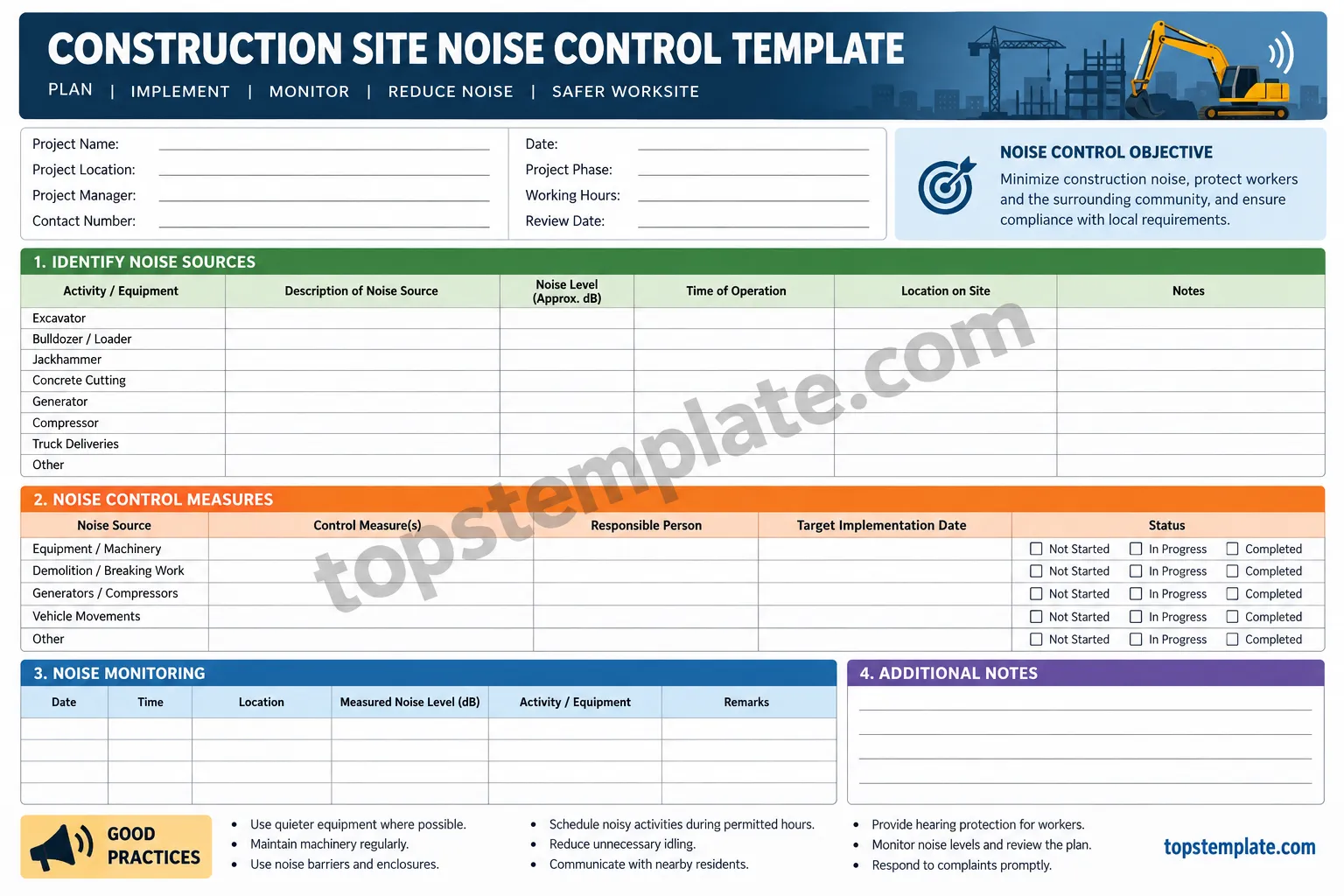
Step 1: Identify Noise Sources
List major equipment and activities that may generate significant noise. Include demolition, excavation, drilling, cutting, piling, concrete work, generators, compressors, and vehicle movements.
Step 2: Identify Sensitive Areas
Map nearby locations that may be affected by construction noise. These may include homes, schools, hospitals, offices, hotels, and other occupied buildings.
Step 3: Select Control Measures
For each significant noise source, determine whether equipment changes, barriers, maintenance, relocation, scheduling, or another measure can reduce its impact.
Step 4: Establish Working Hours
Set appropriate working periods for noisy activities while considering project requirements and local regulations. Communicate these restrictions clearly to contractors and subcontractors.
Step 5: Monitor and Review
Where necessary, use suitable sound-level monitoring equipment to evaluate noise conditions. Keep records of measurements, complaints, corrective actions, and changes to the work plan.
Construction teams can use a simple printable checklist or planning template to organize these activities and make responsibilities easier to track.
Practical Tips for Reducing Construction Noise
- Inspect noisy equipment before each major phase of work.
- Keep engine exhaust and muffler systems in good condition.
- Use barriers between major noise sources and sensitive areas where practical.
- Place generators and compressors away from occupied buildings whenever possible.
- Avoid unnecessary vehicle idling.
- Coordinate deliveries to prevent repeated truck movements.
- Schedule the loudest activities within permitted working hours.
- Inform nearby occupants about particularly noisy construction phases.
- Respond promptly to legitimate noise concerns.
- Review the noise-control plan whenever construction methods or equipment change.
Noise Monitoring on Construction Sites
Noise monitoring can help determine whether control measures are working as intended. A sound level meter can be used to measure environmental noise at selected locations, provided that the equipment is suitable and used correctly.
Monitoring should be planned around the project’s potential noise impacts. Measurements may be useful during particularly noisy activities, near sensitive receptors, or when investigating complaints.
Records should include the measurement location, date, time, activity taking place, equipment operating, and relevant observations. Consistent documentation makes it easier to identify patterns and determine whether additional controls are needed.
Managing Noise Complaints
Even a well-managed construction project may generate occasional complaints. A clear communication process can help resolve concerns before they become larger problems.
Construction managers should establish a contact person for noise-related concerns and keep a record of complaints. Each complaint can be reviewed based on the activity taking place, time of day, equipment involved, and applicable requirements.
Where reasonable, the project team can investigate whether changes such as relocating equipment, adjusting schedules, improving barriers, or modifying work practices could reduce the disturbance.
Benefits of a Proactive Noise Management Approach
Effective construction site noise control is more than a compliance exercise. Planning for noise before construction activities begin can improve communication, reduce avoidable disturbances, and help construction teams operate more efficiently.
A proactive approach also gives site managers a structured way to respond when conditions change. New equipment, revised construction methods, changes in neighboring land use, and different project phases can all alter the site’s noise profile.
Conclusion
Construction site noise control works best when it combines source reduction, equipment maintenance, strategic placement, noise barriers, careful scheduling, worker protection, and appropriate monitoring. The most effective approach depends on the type of construction, equipment being used, surrounding environment, and applicable local requirements.
By identifying major noise sources early and documenting practical control measures, construction teams can reduce unnecessary disturbance while maintaining productive operations. A clear noise-control plan also provides a useful framework for communicating responsibilities and responding to concerns throughout the project.
For ongoing projects, reviewing noise-control measures at each major construction phase can help ensure that the plan remains practical, relevant, and effective.
