A power of attorney header Template is more than a decorative title area. It is the opening structure that helps a reader identify what the document is, who is granting authority, who may receive that authority, and what jurisdiction or transaction the document concerns. A well-designed header can make a legal document easier to review, organize, sign, store, and present to a bank, government office, business, notary, or other third party.
The important distinction is that a polished header does not, by itself, make a power of attorney legally sufficient. The operative language, scope of authority, execution requirements, durability provisions, witnesses, acknowledgment, and state-specific rules can matter just as much as the appearance of the first page. For that reason, the best template separates visual structure from legal substance. The header should identify the instrument clearly without changing statutory wording that may be required in a particular jurisdiction.
This article explains what a strong header should contain, how to structure the first page, how different document types affect the header, and how to evaluate state-specific versions. It also addresses common searches for editable formats and state examples, including California, Florida, and Texas, while emphasizing that a general layout should not be mistaken for a jurisdiction-specific legal form.

What a Power of Attorney Header Should Accomplish
The first job of a power of attorney header is identification. A reader should be able to recognize the document immediately without having to inspect several paragraphs of legal language. A straightforward heading such as “POWER OF ATTORNEY,” followed by a useful descriptor such as “Financial,” “Limited,” “Durable,” or “Real Estate,” can establish the document category before the substantive provisions begin.
The second job is organization. A professional header can identify the principal, agent, jurisdiction, document date, and transaction reference in a compact area. Not every document needs every one of these items at the top, and personal identification details should not be placed in the header simply because there is room. The header should contain information that helps identify the instrument rather than duplicate detailed information that belongs in the body.
The third job is consistency. If a person maintains several powers of attorney, a consistent header system makes it easier to distinguish them. Businesses can use a restrained letterhead treatment, document number, matter reference, or internal record identifier. Individuals may prefer a simple title and date. The goal is clarity rather than visual decoration.

A strong header also establishes hierarchy. The document title should be visually dominant, the document type should be immediately understandable, and supporting information should remain secondary. Excessive graphics, oversized logos, colored backgrounds, and decorative elements can compete with important legal information. For documents likely to be printed, scanned, copied, or reviewed by institutions, simple typography is usually easier to work with.
Core Elements of a Professional Header
A useful header normally begins with the document name. Depending on the purpose, this might read “POWER OF ATTORNEY,” “DURABLE POWER OF ATTORNEY,” “LIMITED POWER OF ATTORNEY,” or another accurate designation. The title should describe the actual instrument rather than exaggerate its scope. For example, a limited authorization should not be labeled as though it grants unrestricted authority.
A second useful element is a short identifying line. This can state the principal’s name, the intended subject, or a matter reference. A business document might identify the company and the representative. A property-related instrument might identify the relevant transaction in a separate field. The key is to keep the header concise so that the operative provisions remain the focus of the document.
A third element may be the jurisdiction. A state name can be useful when the document is specifically prepared for that state’s statutory framework. However, simply placing a state name at the top does not make a document state-compliant. The actual language and execution procedure must still be checked against current law and the circumstances of the document.

- Document title: Clearly identifies the type of power of attorney.
- Principal identification: Identifies the person or entity granting authority when appropriate.
- Agent identification: Can be referenced in the opening section when a compact summary is useful.
- Jurisdiction: May identify the governing state or intended location of use.
- Date: Helps distinguish one instrument from another.
- Matter reference: Useful for business, property, tax, or transaction-specific records.
- Branding: Can be used cautiously for professional or organizational documents without overwhelming the legal text.
The header should not become a substitute for the body of the document. The body should define the authority being granted, any limitations, the effective date, duration, termination rules, successor arrangements, and signing provisions. A visually impressive header cannot repair unclear authority language or an execution procedure that does not satisfy the governing law.

Choosing Between General, Durable, Limited, and Special Formats
A general power of attorney can grant broad authority over categories of affairs, depending on the document and governing law. Because broad authority can carry significant consequences, the header should make the document type unmistakable while the body precisely defines the powers granted. A general heading without a clear scope may create confusion when multiple documents are being reviewed.
A durable power of attorney requires additional care because durability concerns whether authority continues despite later incapacity. State law can define what language or formalities are required. The header can identify the document as durable, but the substantive durability provision must be accurate. This is particularly important when the document is intended for long-term financial planning.
A limited or special power of attorney is narrower. It may authorize a particular transaction, property matter, business task, or representation. Its header should help reinforce that narrow purpose rather than imply a broader delegation. The body should specify the task, relevant parties, duration, and any restrictions with enough precision to reduce uncertainty.

These categories should not be treated as interchangeable labels. A template designer should determine the intended legal function first and select the heading second. If the document will be reviewed by a third party, consistency between the title, opening paragraph, authority clauses, and signature section is especially important.

Designing a Header That Looks Professional
A professional header does not need elaborate graphics. A clean page can use a small logo, a document title, a subtitle, a date line, and a restrained border. The most important design decision is typography. The title should be large enough to identify the instrument, while supporting text should remain readable when the document is printed in black and white.
Margins also matter. Legal documents frequently contain substantial text, signature blocks, acknowledgment language, and additional instructions. A header that consumes a large portion of the first page can push important content unnecessarily onto another page. A compact header preserves space while still creating clear visual hierarchy.
Color should be used conservatively. Dark text on a light background generally produces the strongest contrast for printing and scanning. If a company uses a brand color, it can appear as a small accent line or restrained logo treatment rather than a large decorative background. The goal is to make the document recognizable without making it look like marketing material.

Another important design choice is repeatability. If a firm or organization creates many related documents, the same title position, font hierarchy, spacing, and identification fields can be used across the document family. This creates a recognizable system without changing the legal meaning of individual instruments.

Building the First Page in the Right Order
The first page should normally move from identification to substance. Start with the document title, then provide only the identifying information necessary to orient the reader. The opening paragraph can then identify the principal and agent and establish the authority relationship. From there, the document can move into the specific powers and conditions.
For a reusable template, placeholders should be explicit and easy to distinguish. Examples include “[Principal Full Legal Name],” “[Agent Full Legal Name],” “[Effective Date],” and “[Jurisdiction].” Placeholders should not be so vague that the person completing the document cannot determine what belongs in the field.
It is also useful to keep the header independent from substantive legal clauses. If a statutory form contains required language, changing the wording merely to improve visual style can create unnecessary legal risk. The safer editorial approach is to improve spacing, typography, labels, and page organization around the required language rather than casually rewriting the operative provisions.

For property transactions, the document may require particularly careful identification of the parties and authority. A property-related heading can help a reviewer understand the purpose immediately, but the document should still contain the legally necessary description and authority provisions required for the intended transaction.

Format Choices: Word, PDF, and Editable Documents
People searching for a power of attorney header template free option are often looking for a simple starting structure rather than a complete legal instrument. The important question is not merely whether a template costs anything, but whether its wording fits the intended purpose and jurisdiction. A generic design can be useful for understanding page hierarchy while still requiring legal review before execution.
A search for power of attorney header template free download often signals a desire for a ready-made file. When evaluating such a resource, check whether the source identifies the document type, date of revision, jurisdiction, and limitations. A visually attractive file can still be unsuitable if it contains outdated statutory language or omits important execution provisions.
The phrase power of attorney header template word usually reflects a preference for an editable word-processing format. An editable file is useful when the user needs to change names, headings, references, or organizational branding. However, editing should be limited carefully when the underlying document is intended to follow a statutory form.

Similarly, power of attorney header template pdf describes a format preference rather than a legal category. A fixed document can preserve the visual appearance of the first page, which is useful for final review and printing. But a PDF should still be checked against the current legal requirements and the exact transaction for which it will be used.

State-Specific Considerations: California, Florida, and Texas
A power of attorney header template california should not be treated as a generic national form with a California label added to the top. California has statutory provisions addressing powers of attorney, including the Uniform Statutory Form Power of Attorney. California Probate Code section 4402 provides that a statutory form is legally sufficient when its wording substantially complies with the prescribed form, the form is properly completed, and the principal’s signature is acknowledged. :contentReference[oaicite:0]{index=0}
That distinction matters for template design. A California-oriented header may identify the document as a California statutory power of attorney, but the substantive document should be reviewed against the current statutory form. A county law library resource also cautions that changes to the statutory wording can affect suitability, which reinforces the practical point that visual customization should not casually alter required legal language. :contentReference[oaicite:1]{index=1}

A power of attorney header template florida likewise needs to be separated from the state’s execution rules. Florida Statutes section 709.2105 states that a power of attorney must be signed by the principal and two subscribing witnesses and acknowledged by the principal before a notary public, subject to the statutory provisions. Florida law also addresses durability, validity, agent qualifications, revocation, and acceptance. :contentReference[oaicite:2]{index=2}
Consequently, a Florida header can be visually simple. The critical issue is whether the complete instrument satisfies the applicable requirements. The header should identify the document clearly, while the signing section should be prepared according to the current Florida rules that apply to the specific instrument.

A power of attorney header template texas also requires more than a state label. Texas Estates Code section 752.051 prescribes a statutory durable power of attorney form, and section 752.003 states that the prescribed form is not exclusive. Texas law separately addresses the legal sufficiency of a statutory durable power of attorney and requires acknowledgment of the principal’s signature. :contentReference[oaicite:3]{index=3}

Texas also distinguishes durable powers of attorney from health-care decision-making documents. The statutory durable form concerns property and financial matters, and the statutory notice expressly states that it does not authorize health-care decisions. A header should therefore identify the instrument accurately rather than use “power of attorney” as a catch-all label for every type of delegated authority. :contentReference[oaicite:4]{index=4}
How the Header Changes by Use Case
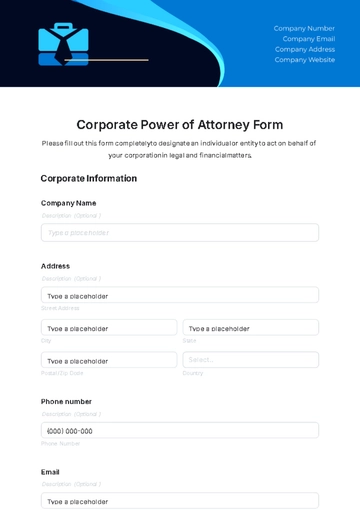
For a business power of attorney, the header can identify the company, document type, and transaction or authority category. The body should then establish who has authority to act and the limits of that authority. This structure is especially useful when the document may be reviewed by banks, suppliers, counterparties, regulators, or internal compliance teams.
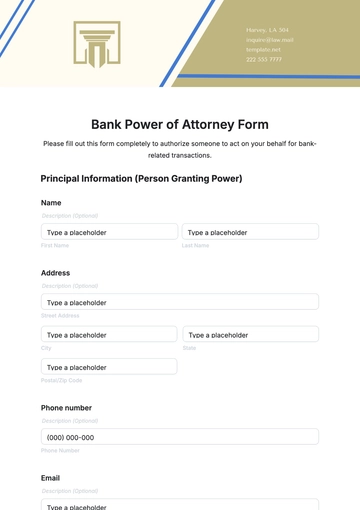
For banking matters, the header can identify the financial purpose without exposing unnecessary account information in the title area. Sensitive account details are generally better placed in the body or in a separate reference record when needed. The visual objective is to identify the document, not to display confidential information prominently.
For property matters, the title can state that the authority concerns real estate, a particular transaction, or a defined property. This can help reviewers distinguish the instrument from a general financial power. The underlying authority clause should still be precise enough to explain what the agent may do.
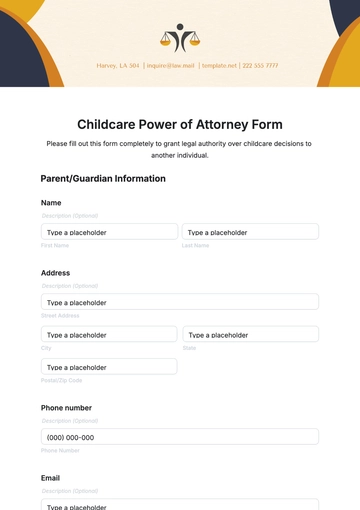
For family or caregiving situations, the header should avoid implying authority that the body does not actually grant. A document concerning child-related decisions, for example, should identify its purpose clearly while the substantive provisions explain the permitted decisions, duration, and limitations.
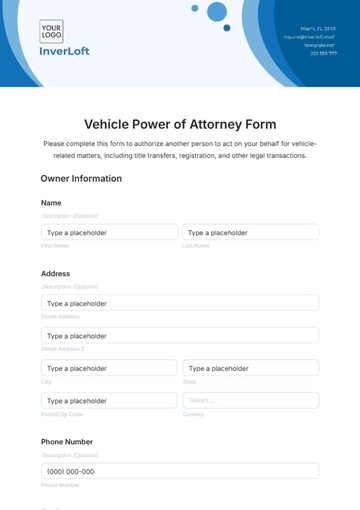
For vehicle transactions, a focused title can make the document easier to distinguish from broader financial powers. This is particularly useful when several documents are being submitted together. The header should identify the transaction category without adding unsupported claims about what a particular motor vehicle authority permits.
Common Header Mistakes
One common mistake is making the header too decorative. Large graphics, oversized branding, or elaborate color blocks may look attractive on screen but can make a legal document harder to print, scan, or review. A restrained design usually performs better for documents that will circulate through formal administrative processes.
Another mistake is using an inaccurate title. Calling a document “Durable Power of Attorney” when the operative language does not establish durability can create confusion. Similarly, describing a limited authorization as “General” can suggest a broader grant than intended. The title should match the legal function of the document.
A third mistake is placing too much personal information in the header. A template may ask for addresses, identification numbers, account references, or other sensitive details even when they are not necessary for the first-page identification. A better structure places only essential identifiers in the header and keeps detailed information in the appropriate body section.
Another frequent problem is confusing an editable format with legal validity. The phrases power of attorney header template word document and power of attorney template word document describe document formats, not legal status. An editable document still needs correct substance, execution, and jurisdictional compliance.
Professional Formatting for Legal and Business Records
A professional template power of attorney should balance visual polish with legal restraint. A useful design system might use one font family, two or three levels of hierarchy, consistent spacing, and a small brand mark. The first page can have a distinctive title while later pages use a simpler running identity through consistent typography and section headings.
Document numbering can also help organizations manage records. A reference such as “Matter 2026-014” may be useful internally, provided it does not replace any legally necessary information. Dates should be handled carefully because the execution date, effective date, and expiration date may be different concepts. The template should label each date according to its actual purpose.
Signature areas should remain uncluttered. A document may require a principal signature, witnesses, acknowledgment, agent acceptance, or other formalities depending on the jurisdiction and document type. The header should not visually compete with these sections, and page breaks should not separate a signature label from the associated lines or acknowledgment text.
Accessibility is another practical consideration. High contrast, readable font sizes, descriptive field labels, and logical document order make the template easier to review. Avoid relying solely on color to distinguish important information. A good legal document should remain understandable when printed without color.
Practical Solution
The most reliable way to create a useful power of attorney header Template is to begin with the legal purpose and work backward to the visual design. First determine who the principal is, who the intended agent is, what authority will be granted, whether the authority is broad or limited, when it begins, when it ends, and which jurisdiction governs the document. Only after those questions are understood should the header be designed.
Next, create a restrained first-page structure. Put the document title at the top, add a concise descriptor if needed, identify the relevant jurisdiction or matter, and then move into the opening appointment language. Keep sensitive information out of the header unless it genuinely helps identify the instrument. If the document follows a statutory form, compare the substantive wording with the current statutory source before making any edits.
Then perform a practical review from the perspective of the person who will receive the document. Ask whether a bank employee, government clerk, business counterparty, notary, attorney, or family representative could identify the document type within a few seconds. Check whether the title matches the body, whether the principal and agent are clearly identified, whether the authority is described consistently, and whether the signature section is complete.
Finally, conduct a jurisdiction-specific execution check. California, Florida, Texas, and other states can differ in their rules for acknowledgment, witnesses, statutory wording, durability, agent authority, and acceptance by third parties. A general template should therefore be treated as a drafting aid rather than a guarantee that the completed instrument will satisfy every legal requirement.
How to Review a Header Before Signing
Start by reading only the first page. The title should immediately tell you what the document is. The names or identifiers should make clear who is granting authority and who is receiving it. The stated purpose should not conflict with the authority clauses later in the document. If the first page creates uncertainty, the document deserves another review before signing.
Then inspect the scope of authority. Look for broad phrases that may grant more power than intended. If the purpose is limited to one transaction, make sure the document actually limits the agent’s authority to that transaction. If the document is intended to continue during incapacity, verify that the durability language is appropriate under the governing law.
Finally, examine the execution section separately from the design. Confirm the required signatures, witness provisions, acknowledgment, dates, and other formalities. Do not assume that a polished template contains the correct signing procedure merely because it resembles a professionally prepared legal document.
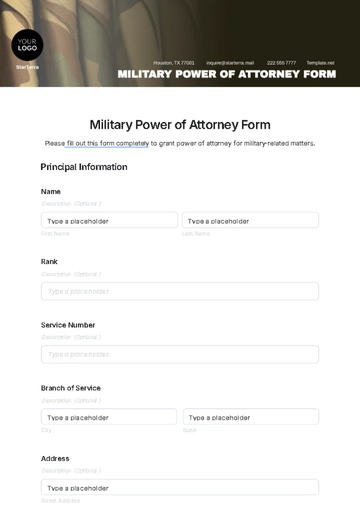
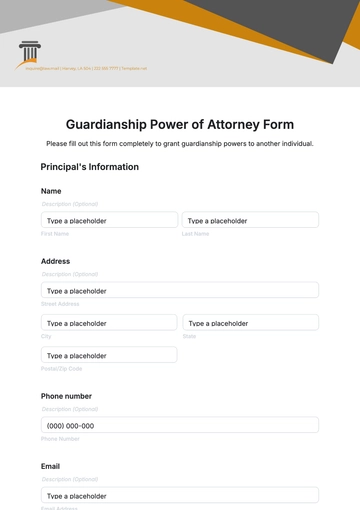
Reference Examples
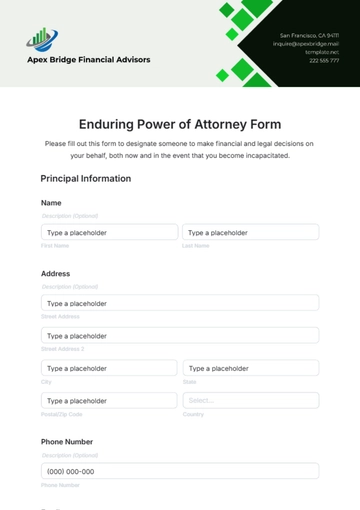
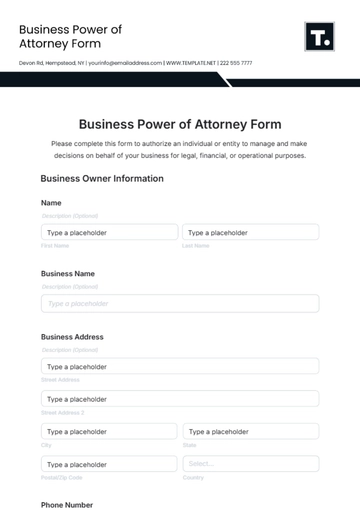
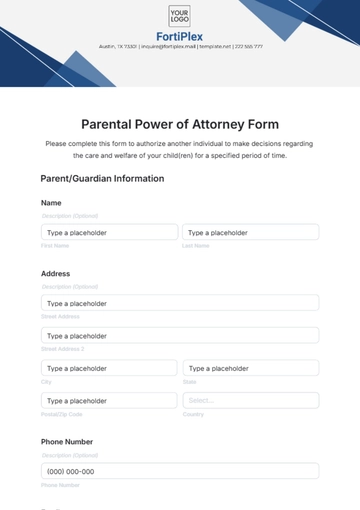
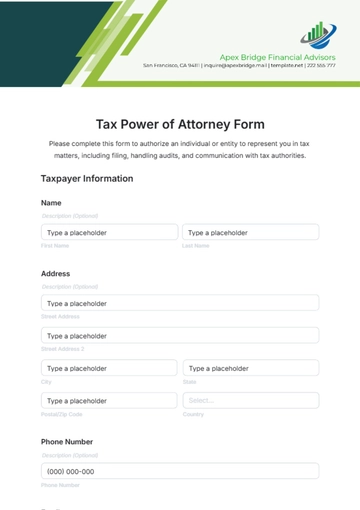
A power of attorney header Template is easiest to evaluate when readers can compare different approaches to hierarchy, spacing, title placement, branding, and document identification. The visual references below show a range of power of attorney layouts, including broad-purpose documents, transaction-specific instruments, state-oriented designs, and forms organized around a particular category of authority. They should be viewed as design references rather than proof that any particular document satisfies the law of a specific jurisdiction.
These examples also demonstrate why the header should support, rather than replace, the substantive legal document. Some designs emphasize a large title, while others use a restrained cover page or place identifying fields close to the opening provisions. Comparing these structures can help readers decide which visual approach makes the purpose of a power of attorney easiest to recognize while preserving room for the clauses, signatures, witnesses, and acknowledgment language that may be required for the intended use.
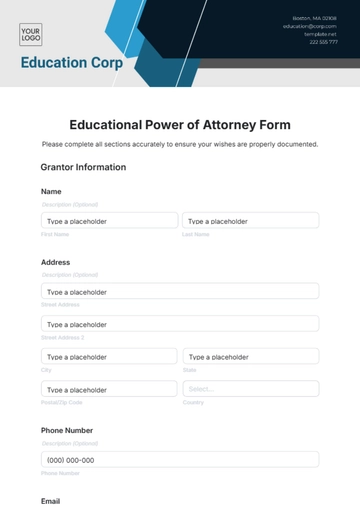
Educational Power of Attorney Form Template
Source: Template.net
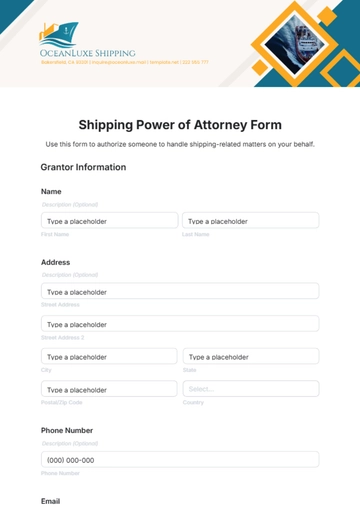
Shipping Power of Attorney Form Template
Source: Template.net
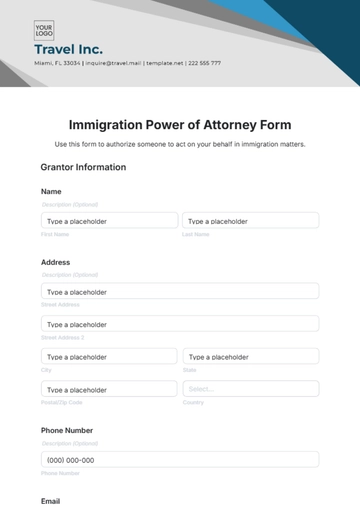
Immigration Power of Attorney Form Template
Source: Template.net
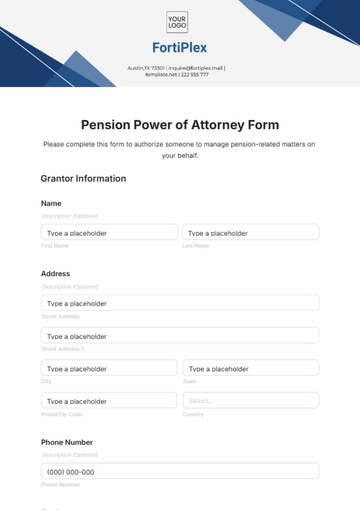
Pension Power of Attorney Form Template
Source: Template.net
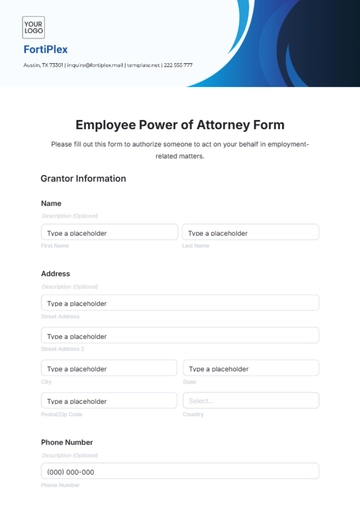
Employee Power of Attorney Form Template
Source: Template.net
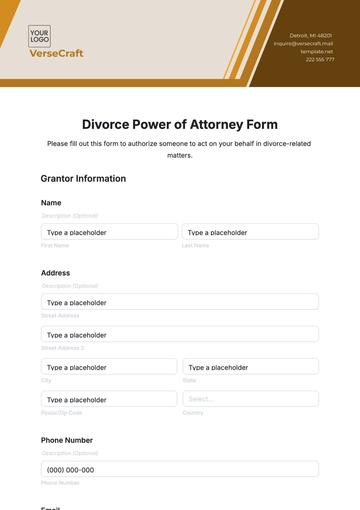
Divorce Power of Attorney Form Template
Source: Template.net
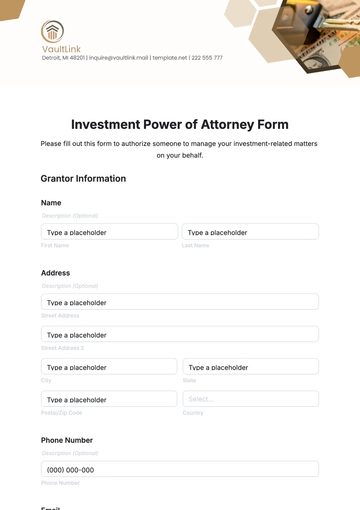
Investment Power of Attorney Form Template
Source: Template.net
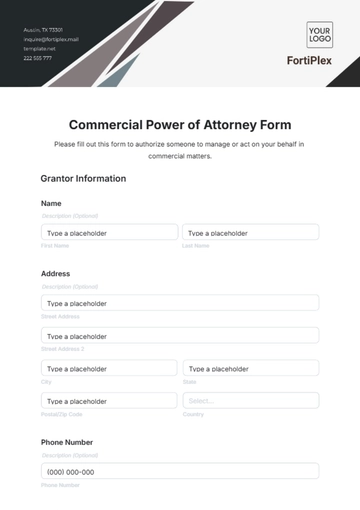
Commercial Power of Attorney Form Template
Source: Template.net
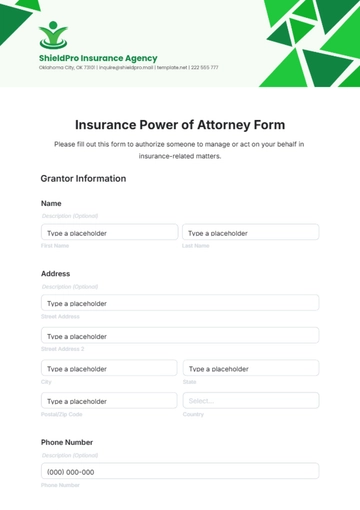
Insurance Power of Attorney Form Template
Source: Template.net
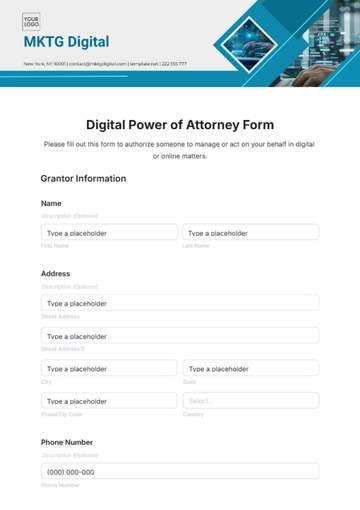
Digital Power of Attorney Form Template
Source: Template.net
