A legal corporate non disclosure agreement nda Template is a structured starting point for documenting how confidential business information may be shared, used, protected, and returned. Companies commonly need this type of agreement when discussing partnerships, acquisitions, investments, product development, software projects, supplier relationships, consulting engagements, business sales, or other transactions involving information that is not intended for public disclosure. An NDA is a contract, not merely a notice that information is private, so the wording should identify the parties, the permitted purpose, the protected information, confidentiality duties, exceptions, duration, remedies, and governing law.
The most useful template is not necessarily the longest one. A corporate NDA should fit the transaction. A one-way agreement can make sense when one company is disclosing most of the sensitive information, while a mutual agreement is generally more appropriate when both sides will exchange proprietary material. Official UK guidance likewise distinguishes one-way and mutual agreements and recommends identifying the permitted purpose and considering which employees or professional advisers may receive confidential information.
This article explains how to evaluate and adapt a corporate NDA rather than treating a generic form as automatically suitable for every transaction. It also addresses document formats, state-specific considerations, cross-border issues, common drafting errors, and a practical workflow for preparing an agreement before sensitive information is shared. A template can organize the drafting process, but jurisdiction, transaction structure, employment context, trade-secret protection, regulatory duties, and the actual information being disclosed can materially affect the final wording.
What a corporate NDA is designed to accomplish
A corporate NDA establishes contractual confidentiality obligations around information exchanged between identified parties. The agreement normally distinguishes the party disclosing information from the party receiving it, although a mutual NDA allows both parties to occupy both roles. This distinction matters because the duties should correspond to the actual flow of information. If a company expects to receive customer information, pricing data, technical material, forecasts, and business plans from a prospective partner, a mutual structure may provide a more balanced framework than a document written solely around one disclosing party.
The agreement should also identify a permitted purpose. Confidentiality is easier to administer when the recipient knows why the information is being provided and what it may legitimately be used for. For example, information might be disclosed solely to evaluate a proposed acquisition, negotiate a supply relationship, assess a software integration, or investigate a joint venture. UK Intellectual Property Office guidance specifically recommends making the permitted purpose as precise as possible because narrowing the permitted use later can be more difficult than widening it.
A corporate NDA should not be treated as a substitute for broader information-security controls. A contract can create obligations, but it does not itself prevent copying, unauthorized access, poor document handling, insecure email transmission, or disclosure to an unintended recipient. The strongest approach combines clear contractual restrictions with sensible access controls, records of what was disclosed, controlled data rooms where appropriate, and internal procedures that limit confidential information to people who actually need it.
When a corporate NDA is commonly used
Corporate NDAs are particularly useful before a transaction reaches the stage where the parties are ready to sign a larger definitive agreement. During preliminary discussions, a prospective buyer may need financial information, a technology partner may need technical specifications, or a manufacturer may need product designs. An NDA creates a contractual framework for those disclosures before the parties have finalized their commercial relationship. Government business guidance in Australia similarly describes confidentiality agreements as a way to protect information such as client lists, pricing information, trade secrets, and business ideas when those materials need to be shared with another party.
Common corporate scenarios include merger and acquisition due diligence, strategic partnerships, joint ventures, vendor negotiations, software development, product testing, licensing discussions, investor presentations, business sales, professional advisory work, and contractor engagements. The agreement should be adapted to the actual scenario because the risks differ. A technology NDA may need detailed treatment of source code, technical documentation, prototypes, credentials, and development information, while an acquisition NDA may focus more heavily on financial records, customer information, employee data, operational metrics, and the fact that negotiations are occurring.
Another important use case is information that has value because it remains confidential rather than because it is protected by a registered intellectual-property right. Trade secrets and other confidential business information can include processes, formulas, customer information, strategies, technical methods, and commercial information. In the United States, trade-secret protection is tied to concepts such as economic value from secrecy and reasonable efforts to maintain secrecy, although the exact legal framework varies by jurisdiction. A well-drafted NDA can support those broader protection efforts, but the contract should not be assumed to create trade-secret status for information that does not otherwise satisfy applicable law.

One-way versus mutual corporate NDAs
One-way NDA
A one-way NDA is appropriate when information principally moves in one direction. A company might provide confidential financial information to a prospective buyer, give proprietary specifications to a manufacturer, or provide internal information to an outside consultant. The recipient assumes the confidentiality and non-use obligations, while the disclosing organization may have relatively few corresponding obligations under the NDA itself.
The advantage of a one-way structure is clarity. It avoids pretending that both sides are exchanging sensitive information when they are not. It can also make the obligations easier to administer because the agreement identifies one party as the principal source of confidential information. The document should nevertheless allow carefully defined disclosures to employees, professional advisers, affiliates, or contractors when those people genuinely need access for the permitted purpose.
A one-way structure should not be selected merely because it appears more protective. If both companies expect to exchange confidential information, forcing a one-way agreement can create unnecessary negotiation friction and leave the second party’s information inadequately protected. The correct structure should reflect the real transaction rather than the preference for a particular template.

Mutual NDA
A mutual NDA makes sense when both parties may disclose confidential information. Each party becomes a disclosing party when providing its own protected information and a receiving party when receiving the other side’s material. The obligations should generally operate symmetrically unless the transaction justifies specific differences.
Mutual agreements are common in prospective partnerships, technical integrations, joint ventures, licensing negotiations, and early-stage acquisition discussions. They can reduce the need to negotiate two separate confidentiality documents because both sides operate under one framework. UK guidance expressly identifies mutual agreements as a distinct NDA type for situations where both parties disclose information.
The main drafting risk is assuming that “mutual” automatically means “balanced.” A mutual agreement can still contain unusually broad definitions, long confidentiality periods, restrictive use provisions, or aggressive remedies. Each party should therefore review the document from both perspectives: what information it will disclose and what information it will receive.

Core clauses every corporate NDA should address
The first core provision is the definition of Confidential Information. The definition can cover written, electronic, oral, visual, technical, financial, commercial, and other information, but its scope should be connected to the transaction. A definition that attempts to cover literally everything a company knows may be harder to administer and may create unnecessary disputes over information that was never intended to be protected.
The agreement should also address information that is not confidential for contractual purposes. Typical exclusions can include information already public through no breach, information already lawfully known by the recipient, information independently developed without use of the protected material, information lawfully received from another source without a confidentiality obligation, and disclosures required by law or legal process. The precise wording matters, especially where the parties operate in different jurisdictions.
Another central clause establishes the recipient’s duties. These usually include maintaining confidentiality, using the information only for the permitted purpose, restricting access to authorized persons, taking reasonable protective measures, and avoiding unauthorized disclosure. A strong clause should also address what happens if the recipient learns that confidential information has been disclosed improperly, including whether prompt notice to the disclosing party is required.
Defining confidential information precisely
Corporate confidentiality definitions often work best when they combine categories with practical identification rules. Categories may include business plans, pricing, customer information, supplier information, financial data, forecasts, product plans, designs, software, source code, technical specifications, research, processes, know-how, and negotiations. The agreement can also explain how oral or visual disclosures are treated, especially when confidential information will be discussed during meetings or demonstrations.
Marking information “confidential” can help, but it should not become an unintended loophole. A company may disclose sensitive information verbally, through a demonstration, or in a meeting where individual documents cannot reasonably be labeled. UK guidance notes that an NDA can cover information shared during meetings and presentations, provided the parties can appropriately control who receives it.
Companies should also keep practical records of disclosures. A simple disclosure register can record the date, project, recipient, category of information, and method of transmission. For major transactions, a data-room index can provide a stronger record. These practices make it easier to establish what information was actually shared and help the recipient identify which materials remain subject to confidentiality obligations.

Purpose, permitted use, and non-use restrictions
An NDA should explain not only what information is confidential but also what the recipient is allowed to do with it. The permitted purpose is the bridge between disclosure and lawful use. If the purpose is evaluating a proposed acquisition, the recipient should not automatically gain permission to use the information to compete, contact customers, develop an unrelated product, or disclose it to another organization.
The permitted-use clause should be practical enough for the transaction. A recipient may legitimately need to copy documents, conduct internal analysis, use professional advisers, involve financing sources, or share information with specified representatives. A clause that prohibits every copy or every internal disclosure can make the agreement commercially impractical. The better approach is to define legitimate access while maintaining responsibility for people who receive information through the recipient.
For example, a technology company evaluating a prospective integration might allow confidential technical documentation to be reviewed by its engineers, outside counsel, accountants, and security advisers, provided each recipient is subject to confidentiality duties. A corporate NDA should make that chain of responsibility clear instead of leaving the parties to infer what is permitted.

Duration, survival, and return of information
Confidentiality obligations should have a clearly considered duration. Some agreements use a fixed period, while others provide different treatment for ordinary confidential information and trade secrets. UK guidance notes that three- or five-year periods are commonly seen, while some information may remain confidential indefinitely, depending on its nature.
The agreement should distinguish between the term of the contract and the survival of confidentiality obligations. An NDA may terminate after negotiations end while certain confidentiality obligations continue. Without this distinction, parties can disagree about whether the end of the business discussion also ended the recipient’s duty to protect previously disclosed information.
Return-or-destruction provisions are equally important. At the end of a project, the recipient may be required to return or destroy documents, copies, extracts, and other materials containing confidential information. Practical exceptions may be necessary for routine backups, legal retention requirements, regulatory records, or professional files that must be retained by law, subject to continuing confidentiality duties.

Remedies and breach provisions
A corporate NDA should explain the contractual consequences of unauthorized disclosure without relying on exaggerated or automatically enforceable penalties. Depending on applicable law and the agreement, remedies can include damages, equitable relief, specific performance, or other contractual or legal remedies. The drafting should recognize that a court ultimately determines what relief is available and enforceable.
Some agreements emphasize the possibility of irreparable harm and seek equitable relief when confidential information is threatened with disclosure. That can be commercially important because monetary compensation may not fully address the harm caused by publication of a secret product design or customer list. However, remedies should be reviewed under the law governing the agreement rather than copied mechanically from another template.
The agreement should also establish a sensible breach-notification process. If a recipient discovers unauthorized access, accidental transmission, or disclosure by an employee or contractor, rapid notification can help the disclosing party mitigate the consequences. A useful NDA therefore considers both legal remedies and operational response procedures.
Corporate parties, representatives, and affiliates
Corporate NDAs should identify the actual legal entities involved rather than relying on informal business names. The agreement should state the correct company name, entity type where appropriate, address or registered information where required, and the capacity of the people signing. This becomes particularly important when a parent company, subsidiary, affiliate, investment vehicle, or special-purpose entity is involved.
The definition of representatives should be handled carefully. A corporation may need to disclose information to employees, directors, officers, lawyers, accountants, insurers, financing sources, technical advisers, or contractors. The NDA can permit such disclosure on a need-to-know basis while requiring appropriate confidentiality obligations. UK guidance similarly recommends considering necessary disclosures to employees and professional advisers rather than drafting a rule that makes ordinary business operations impossible.
If affiliates will receive information, the agreement should say so expressly. Otherwise, a company may believe that sharing information with a sister company is permitted while the contractual language technically restricts disclosure to the named recipient. The document should also clarify whether the signing entity remains responsible for confidentiality breaches committed by its permitted representatives.
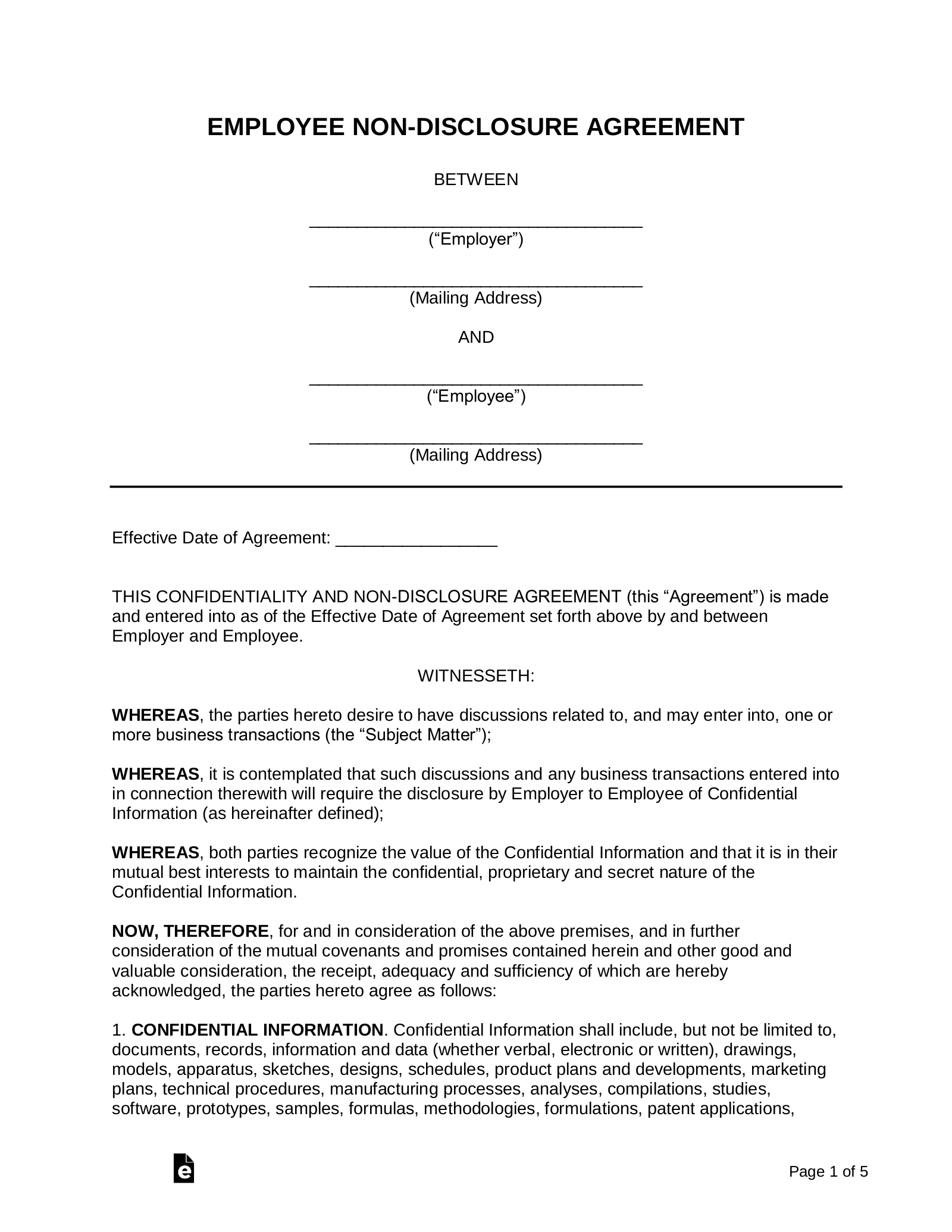
Format choices for corporate NDA documents
Searchers often look for a legal corporate non disclosure agreement nda template word because an editable document is convenient for negotiations. An editable document can be useful for inserting party names, adjusting the permitted purpose, revising definitions, and marking negotiated changes. The important issue is not the file extension itself but whether the resulting agreement accurately reflects the transaction and is properly reviewed before signing.
Readers searching for a legal corporate non disclosure agreement nda template pdf are usually looking for a fixed-layout version that is convenient for review, circulation, printing, or execution. A PDF can help preserve formatting and reduce accidental editing, but it should normally be created from an approved final version rather than treated as evidence that the underlying wording is suitable for a particular jurisdiction.
Requests such as legal corporate non disclosure agreement nda template excel require special caution. A spreadsheet can be useful for tracking NDA status, disclosure registers, renewal dates, parties, project identifiers, and execution status, but it is generally a poor primary format for the actual contractual text. The agreement itself should remain in a format that clearly presents clauses, signatures, defined terms, and amendments.

How to evaluate a legal corporate NDA template
A search for a legal corporate non disclosure agreement nda template free may lead to many generic forms. The important question is not whether a template has a polished appearance but whether it contains the clauses needed for the transaction. A reader should first identify the parties, information flow, permitted purpose, likely representatives, confidentiality period, return requirements, governing law, and dispute mechanism before deciding whether a generic structure is adequate.
Someone seeking a legal corporate non disclosure agreement nda template free download may be focused on obtaining a ready-to-use document, but a ready-made file still needs substantive review. The existence of a template does not establish that it complies with the law applicable to the transaction. Official UK guidance, for example, provides example one-way and mutual NDA documents but also emphasizes the need to consider governing law, enforcement location, purpose, duration, and the circumstances in which information will be shared.
Similarly, a search for a legal corporate non disclosure agreement nda template word free may reflect a need for an editable corporate form, while the actual legal requirement may concern much more than editing convenience. Before execution, verify the entity names, signatory authority, confidentiality definition, exclusions, permitted use, duration, return or destruction provisions, compelled-disclosure process, remedies, governing law, and any special regulatory limitations.
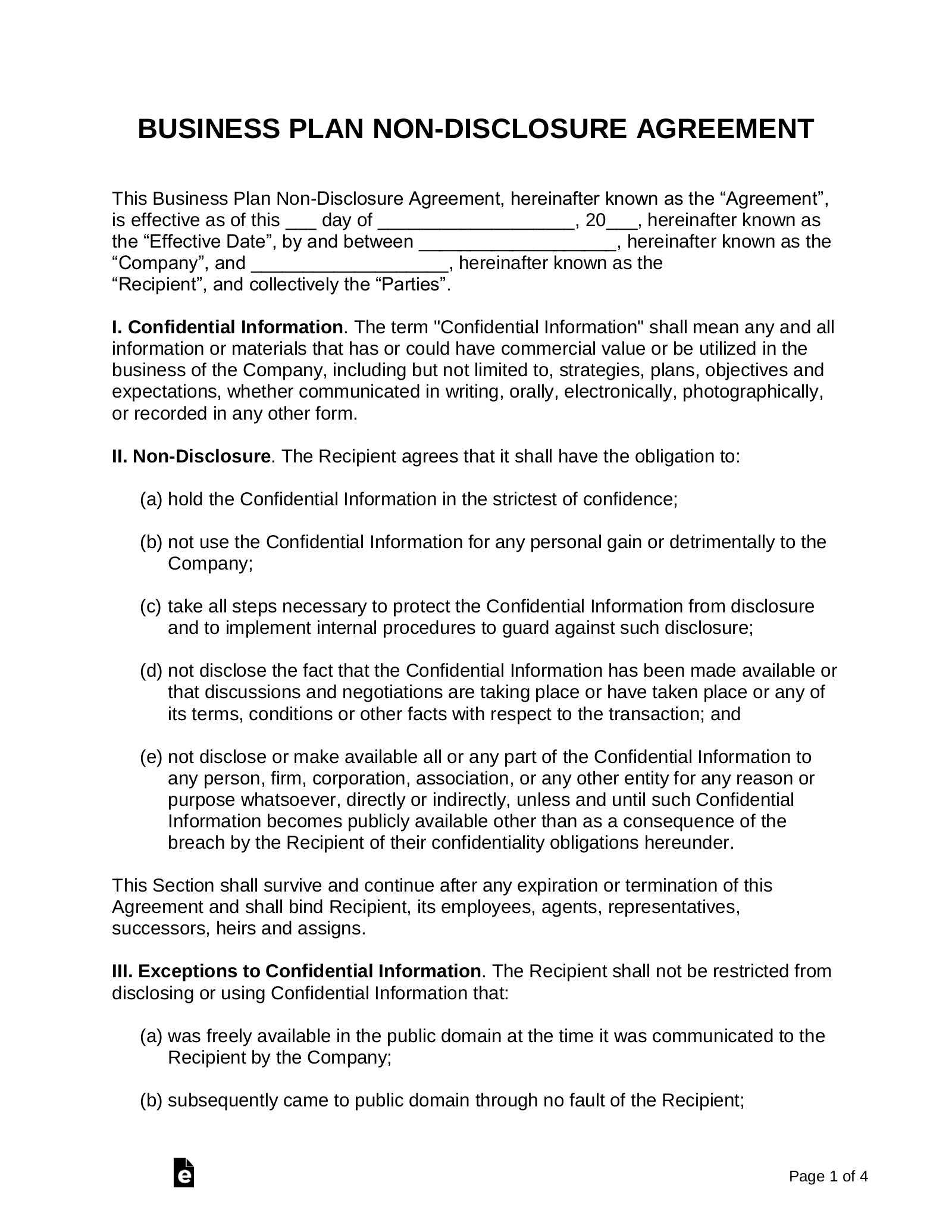
California considerations
A search for a legal corporate non disclosure agreement nda template california should not be answered by simply replacing the governing-law field with “California.” California’s treatment of contractual restrictions, confidentiality provisions, and trade secrets requires careful drafting. California’s trade-secret statute defines protected trade secrets around economic value from secrecy and reasonable efforts to maintain secrecy, making the actual nature of the information and the company’s protective practices important considerations.
A California corporate NDA should therefore distinguish legitimate confidentiality and non-use obligations from broader restrictions that may interfere with lawful business activity. The drafting should be tailored to the information genuinely requiring protection, rather than using confidentiality language as a substitute for a broad restraint on competition.
For a California transaction involving employees, former employees, contractors, or potential competitors, specialist legal review is particularly valuable. A corporate template can organize the basic confidentiality structure, but California-specific enforceability questions should be evaluated against current law and the precise relationship between the parties.

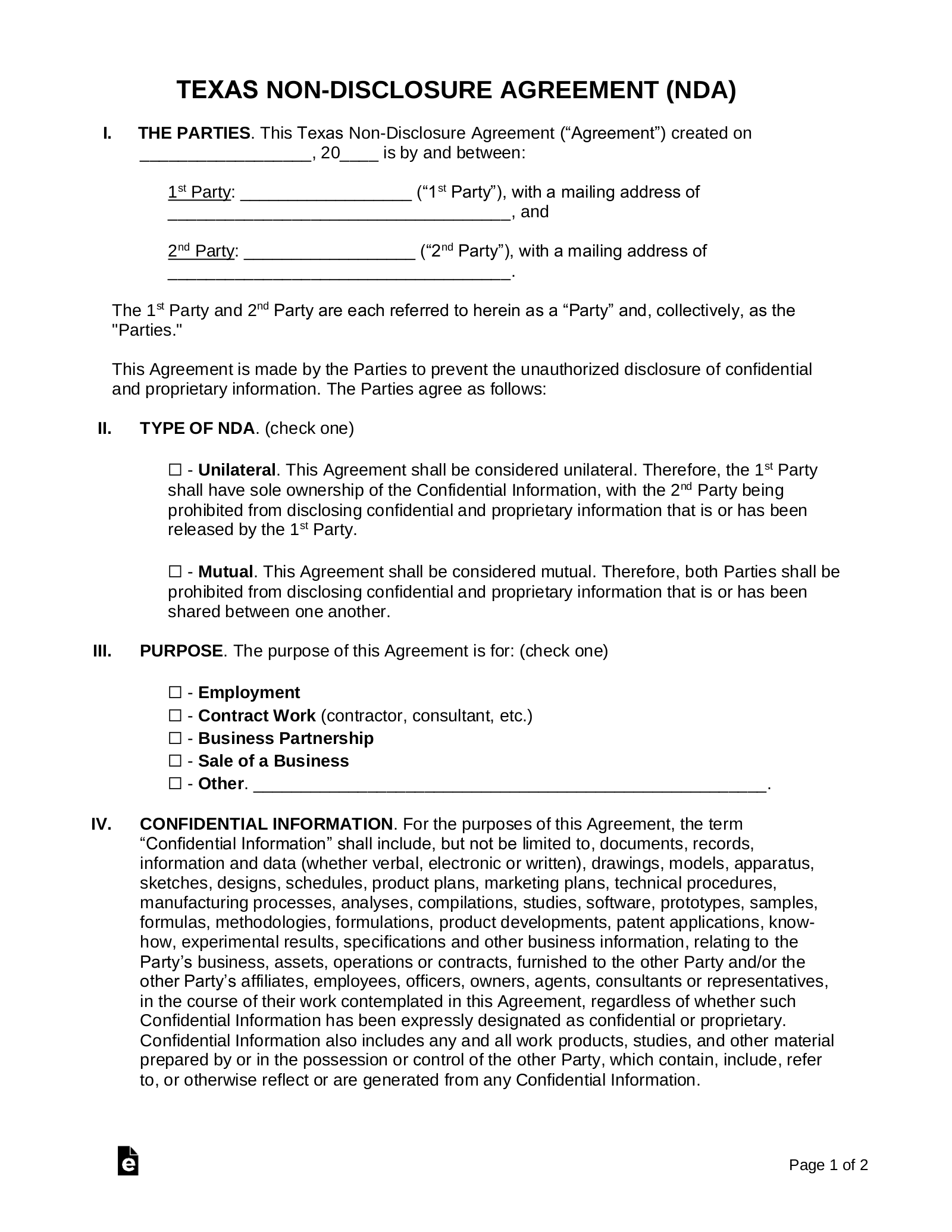
Texas considerations
A search for a legal corporate non disclosure agreement nda template texas should account for Texas trade-secret law and the specific commercial relationship. Texas’s Uniform Trade Secrets Act addresses trade secrets and misappropriation, including disclosure or use without consent in circumstances covered by the statute.
A Texas NDA should clearly define the information being protected and the restrictions on its use. The agreement should also fit the transaction rather than attempting to use a generic confidentiality clause for unrelated purposes. If the dispute involves trade secrets, the statutory framework and contractual remedies can interact, so the final agreement should be reviewed with the governing law and enforcement strategy in mind.
Texas also provides a useful reminder that a corporate NDA can operate alongside statutory protections rather than replacing them. The contract establishes agreed duties between the parties, while trade-secret law may provide additional remedies or standards. A well-designed agreement should avoid suggesting that the contract is the only source of protection.
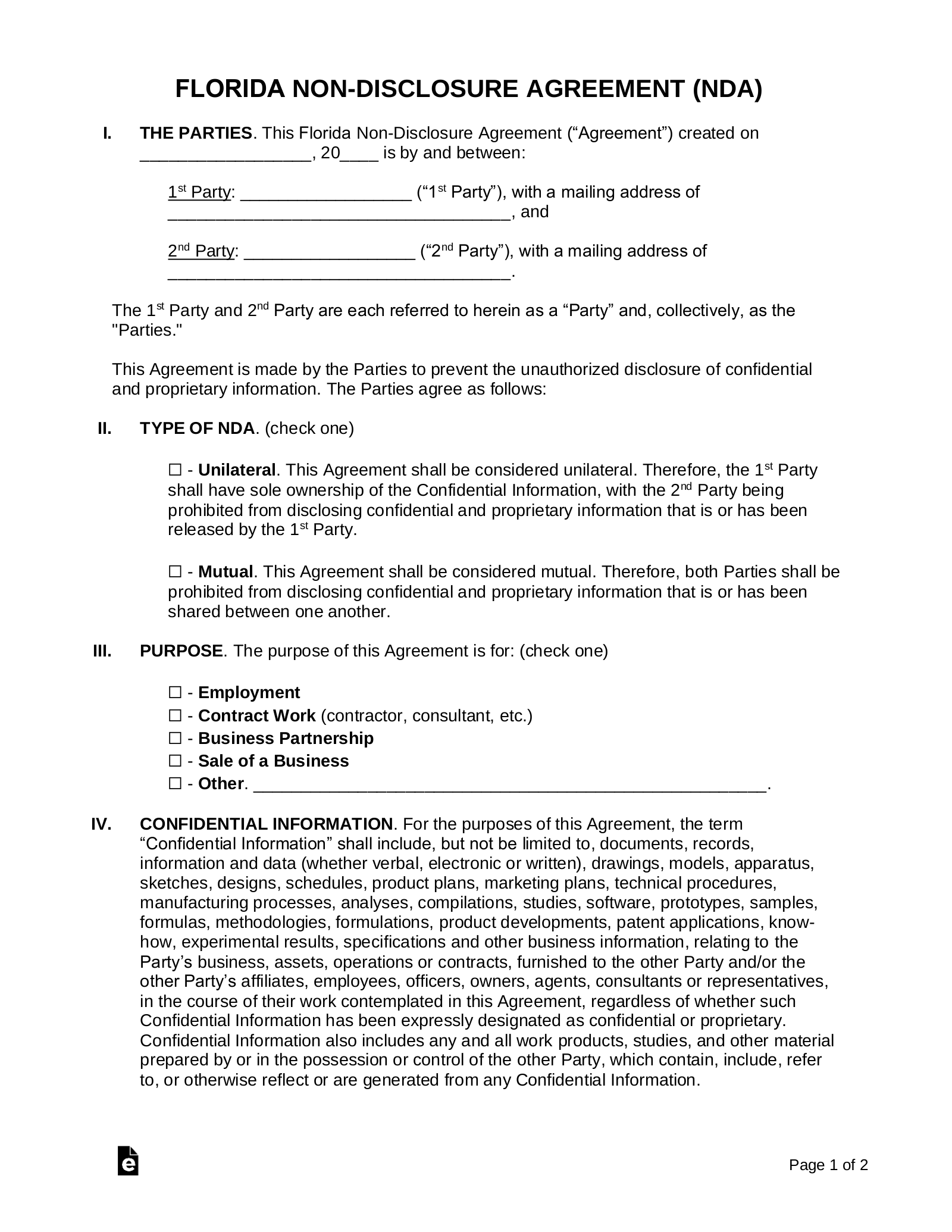
Florida considerations
For readers searching for a legal corporate non disclosure agreement nda template florida, the main drafting lesson is to distinguish contractual confidentiality from statutory trade-secret protection. Florida’s Uniform Trade Secrets Act defines concepts such as misappropriation and includes a statutory framework for trade-secret remedies. Florida law also expressly preserves contractual remedies in the trade-secret statutory framework.
A Florida corporate NDA should therefore describe confidential information with enough precision to show what the parties intended to protect. Trade-secret information may include commercial, technical, or other information that has economic value because it is not generally known and is subject to reasonable efforts to maintain secrecy. Internal policies and access controls can reinforce that contractual position.
Companies operating in Florida should also consider whether public-records rules, regulated information, employment circumstances, or another specialized legal regime affects the disclosure. A generic corporate NDA cannot safely assume that every category of information can be treated identically.
UK considerations
A legal corporate non disclosure agreement nda template uk should identify the governing legal system carefully. England and Wales, Scotland, and Northern Ireland do not share identical legal systems, so “UK law” is not a sufficiently precise substitute for a properly drafted governing-law and jurisdiction clause. UK Intellectual Property Office guidance specifically notes the importance of governing law and enforcement courts for agreements involving parties in different countries.
UK NDA drafting also requires attention to legally protected disclosures. GOV.UK guidance explains that confidentiality clauses cannot prevent protected whistleblowing disclosures, and more recent guidance confirms changes effective from 1 October 2025 concerning certain disclosures by victims of crime in England and Wales.
That means a corporate NDA intended for England and Wales should not contain sweeping language that purports to prevent every disclosure in every circumstance. The permitted-disclosure framework should be reviewed carefully, especially where the agreement relates to employment, settlement arrangements, investigations, regulated industries, or information connected with alleged wrongdoing.
Australia considerations
A search for a legal corporate non disclosure agreement nda template australia should lead to a jurisdiction-specific review rather than a direct import of a United States or United Kingdom form. Australian business guidance describes confidentiality clauses as a way to protect information such as client lists, pricing information, and trade secrets, and emphasizes specifying the types of information that are confidential.
For an Australian corporate transaction, the agreement should identify the parties accurately, explain the commercial purpose, define confidential information, establish permitted use, control onward disclosure, address compelled disclosure, and specify what happens when negotiations end. Depending on the transaction, additional privacy, employment, intellectual-property, competition, or regulatory considerations may affect the drafting.
Cross-border transactions require additional care. An Australian company exchanging information with an overseas corporation may need provisions dealing with governing law, jurisdiction, data transfers, advisers, affiliates, and international enforcement. The NDA should be treated as one part of the transaction’s legal architecture rather than as an isolated document.

International and cross-border corporate NDAs
International confidentiality agreements create additional questions that domestic templates often overlook. The agreement should identify the governing law and the courts or dispute-resolution forum that will hear disputes. It should also consider where the information is stored, where recipients operate, where a breach might occur, and whether the parties need to enforce the agreement in more than one country.
Language and execution requirements can matter as well. A multinational transaction may involve subsidiaries, translated versions, electronic signatures, different corporate authorization procedures, and different rules concerning discovery or injunctive relief. A clause that appears straightforward in one jurisdiction may operate differently when enforcement is sought elsewhere.
International NDAs should also distinguish confidentiality from data protection. Personal information, health information, financial information, and regulated records may be subject to laws that impose duties beyond the contractual NDA. The confidentiality agreement should not be drafted as though a private contract automatically overrides mandatory statutory obligations.
Common mistakes when using corporate NDA templates
One common mistake is using a template without identifying the exact transaction. A generic agreement may say that confidential information is being disclosed for “business purposes” without explaining whether the parties are evaluating a purchase, partnership, investment, technology integration, or supplier relationship. A precise purpose makes later interpretation easier and helps prevent legitimate use from being confused with unauthorized use.
Another mistake is defining confidential information too broadly while failing to create workable exclusions. If every piece of information becomes confidential regardless of whether it was already public or independently developed, the recipient may struggle to determine its actual duties. Conversely, a definition that protects only documents stamped confidential may omit oral discussions, demonstrations, technical presentations, and other important disclosures.
A third mistake is forgetting representatives and affiliates. Corporate transactions rarely involve only the two people who sign the NDA. Lawyers, accountants, executives, engineers, financing sources, consultants, and other authorized personnel may need access. The agreement should permit legitimate access while preserving confidentiality and responsibility for unauthorized disclosure.

Practical Solution
The practical solution is to treat the NDA as a transaction-specific checklist rather than as a document that can simply be signed as received. Start by identifying the parties and determining whether information will move one way or both ways. Then write a concise description of the permitted purpose. Next, inventory the information expected to be disclosed and divide it into useful categories such as financial, commercial, technical, customer, product, operational, and strategic information.
After that, define the confidentiality rules and exclusions. Decide whether oral and visual disclosures are covered, how representatives may access information, what standard of care applies, and whether particularly sensitive material requires additional controls. Establish the duration of the obligations and consider whether trade secrets or other categories should receive different treatment. Add return-or-destruction provisions that account for legal retention, backups, and professional records where appropriate.
The final review should focus on enforceability and operational practicality. Confirm the correct governing law, jurisdiction, dispute mechanism, remedies, compelled-disclosure procedure, signatory authority, and any sector-specific restrictions. For California, Texas, Florida, the UK, Australia, or another jurisdiction, have the final wording reviewed against current local law rather than assuming that a general corporate NDA will produce the same result everywhere.

Suggested corporate NDA review workflow
A practical review can begin with a five-stage workflow. Stage one is transaction mapping: identify the parties, business purpose, information flow, likely recipients, and jurisdictions. Stage two is information mapping: list the confidential categories and identify any especially sensitive material. Stage three is clause review: examine definitions, exclusions, use restrictions, representatives, duration, return requirements, remedies, governing law, and dispute provisions.
Stage four is operational review. Ask how information will actually move between the parties. If documents will be placed in a data room, identify who can access them. If technical information will be demonstrated orally, determine how those disclosures will be recorded. If outside advisers will receive information, confirm that the NDA permits the disclosure and imposes appropriate confidentiality duties.
Stage five is execution and recordkeeping. Verify that each company is correctly named and that the signatories have authority. Retain the signed agreement with the transaction records and maintain a record of material disclosures. The NDA should be signed before sensitive information is disclosed whenever practicable. GOV.UK guidance specifically advises parties not to disclose their ideas or information until the NDA has been signed and returned.

What should be checked before signing
Before execution, confirm that the agreement protects the information the business actually cares about. Check whether customer lists, pricing, financial forecasts, source code, designs, product roadmaps, business plans, research, supplier information, and negotiation details are covered where appropriate. Also check whether information already known to the recipient, independently developed, publicly available, or lawfully received from another source is treated appropriately.
Next, review the practical limits. Can the recipient share information with its lawyers and accountants? Can an acquiring company share information with financing sources? Can a technology partner allow engineers to inspect source code? What happens if a regulator or court requires disclosure? What happens to archived records? These questions are often more useful than simply asking whether the NDA looks comprehensive.
Finally, confirm that the agreement does not accidentally impose obligations unrelated to confidentiality. A corporate NDA may contain non-use, non-solicitation, non-circumvention, intellectual-property, or standstill provisions, but each additional restriction should be reviewed separately. Confidentiality protection and broader commercial restraints are not interchangeable concepts.
Why a template should be customized rather than copied
A template is useful because it provides structure, terminology, and a checklist of issues that might otherwise be forgotten. It can help a legal or business team start negotiations quickly and create consistency across similar transactions. It can also make internal review easier because recurring clauses such as confidentiality, exclusions, permitted purpose, duration, and governing law are organized in a predictable sequence.
However, a template becomes risky when its wording is treated as universally appropriate. An NDA written for an employee may not fit a merger negotiation. A software-development NDA may contain technical definitions that are unnecessary for a property transaction. A one-way agreement may not work when both companies disclose information. A domestic US form may also be unsuitable for an international transaction.
The best use of a template is therefore as a drafting framework. Replace generic descriptions with transaction-specific language, remove irrelevant provisions, add necessary protections, and have counsel review provisions that could affect enforceability. Official sources themselves present NDA examples as practical starting points rather than universal substitutes for legal judgment. The UK Intellectual Property Office, for example, publishes both one-way and mutual examples while emphasizing factors such as purpose, duration, disclosure circumstances, and governing law.
Final considerations for corporate users
The strongest corporate NDA is specific about what is protected, why it is being shared, who may receive it, how it may be used, how long the obligations last, and what happens when the relationship ends. It should be understandable to the business teams that must follow it and precise enough for legal professionals to interpret. A document that is extremely broad but operationally confusing can be less useful than a shorter agreement carefully aligned with the transaction.
Companies should also remember that contractual confidentiality is only one part of protecting valuable information. Internal policies, access permissions, employee training, secure storage, vendor controls, records of disclosure, and appropriate intellectual-property strategies can all support confidentiality. Australian government guidance, for example, connects trade-secret protection with maintaining confidentiality before sharing information, including when businesses are considering advisers, designers, or investors.
For that reason, the search for a corporate NDA template should ultimately lead to a review process, not merely a file. Whether the desired format is editable text, a fixed document, a printable form, or a structured tracking record, the central question remains the same: does the agreement accurately capture the parties’ real confidentiality obligations under the law that governs the transaction?
Reference Examples
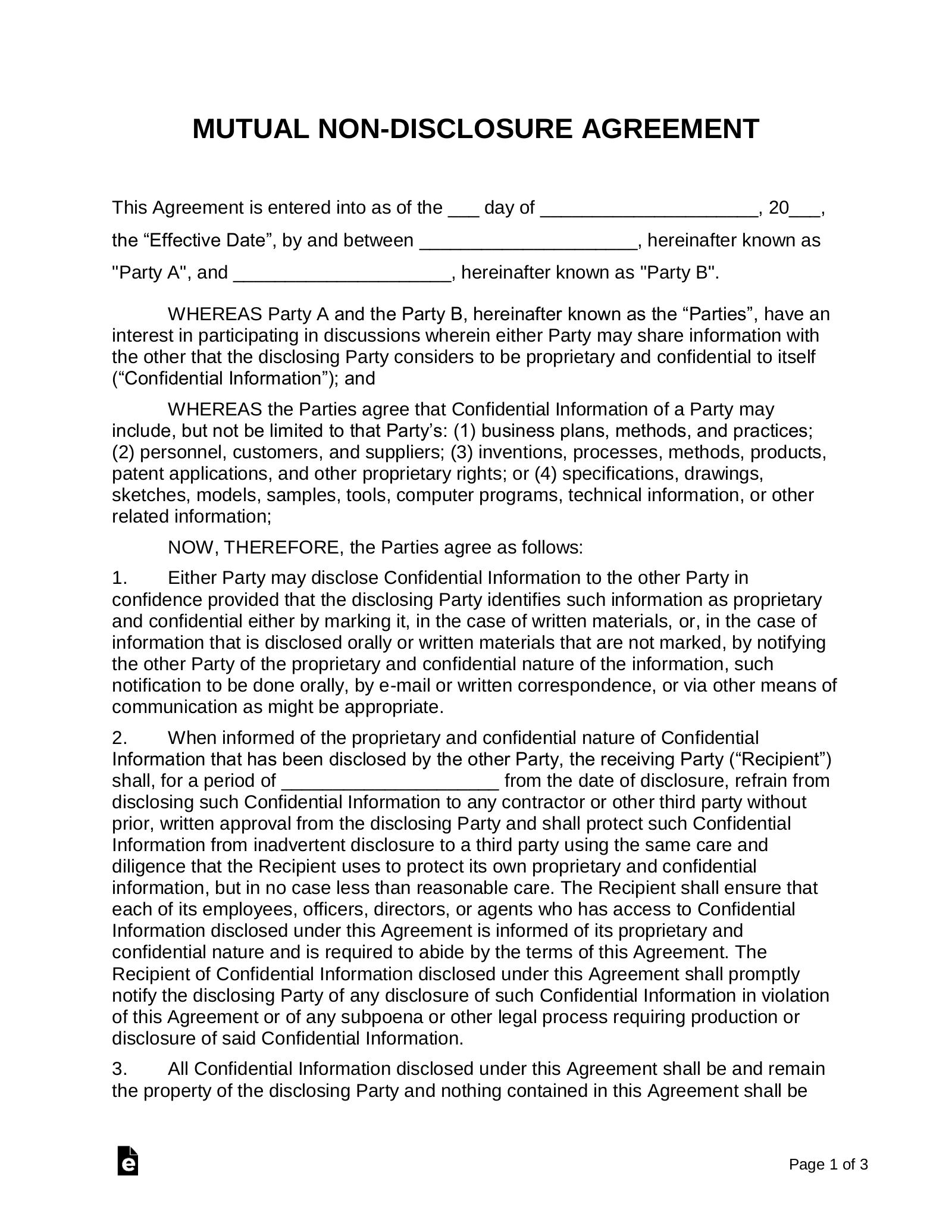
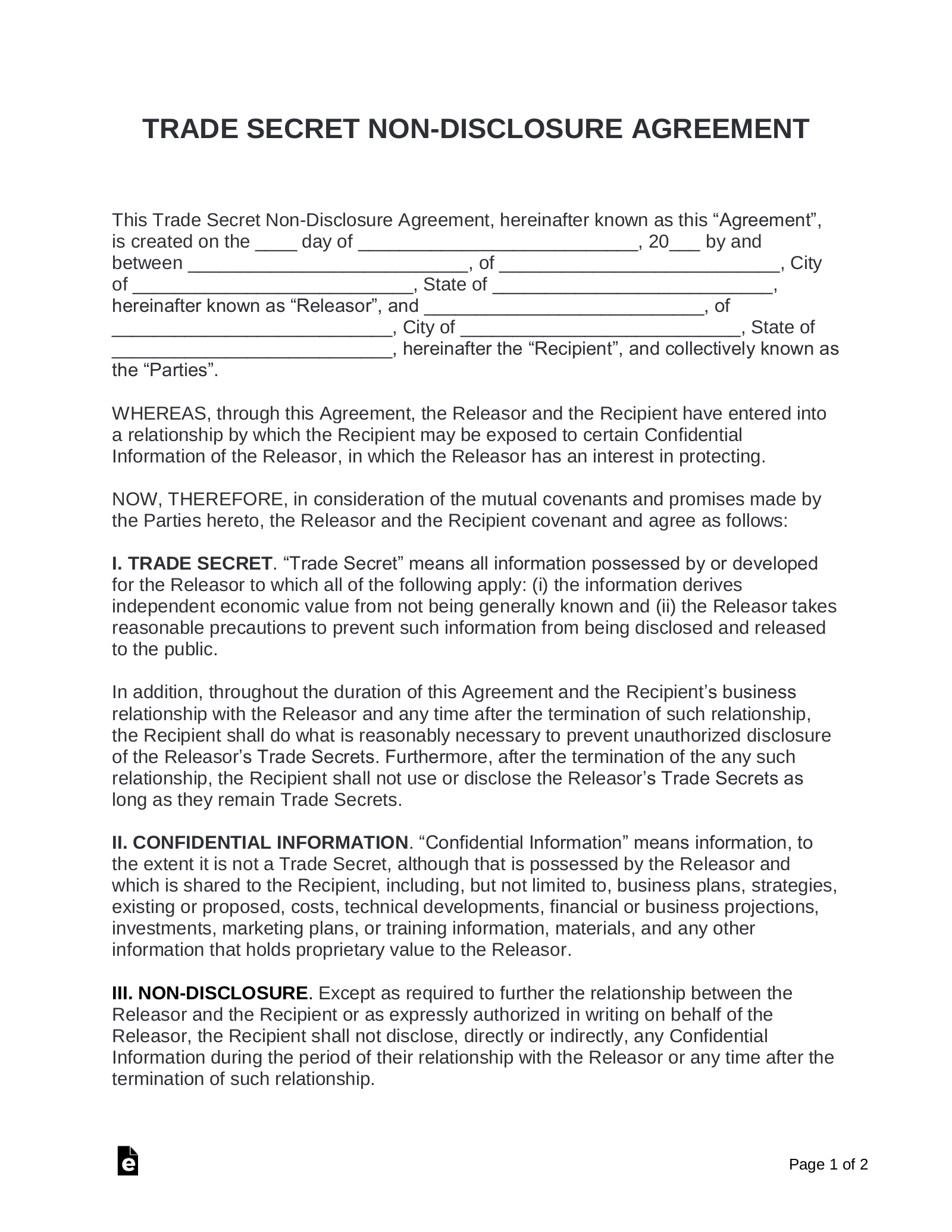
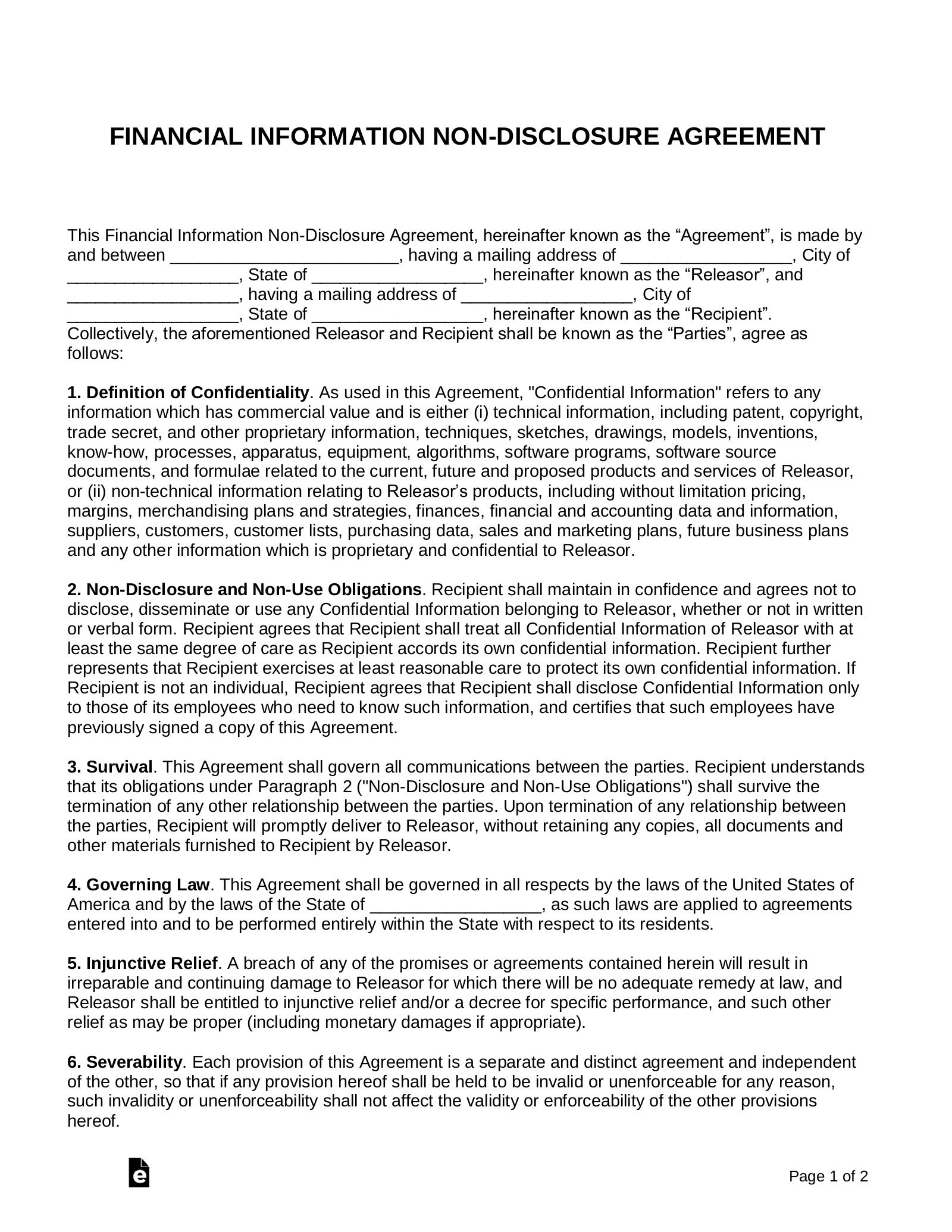
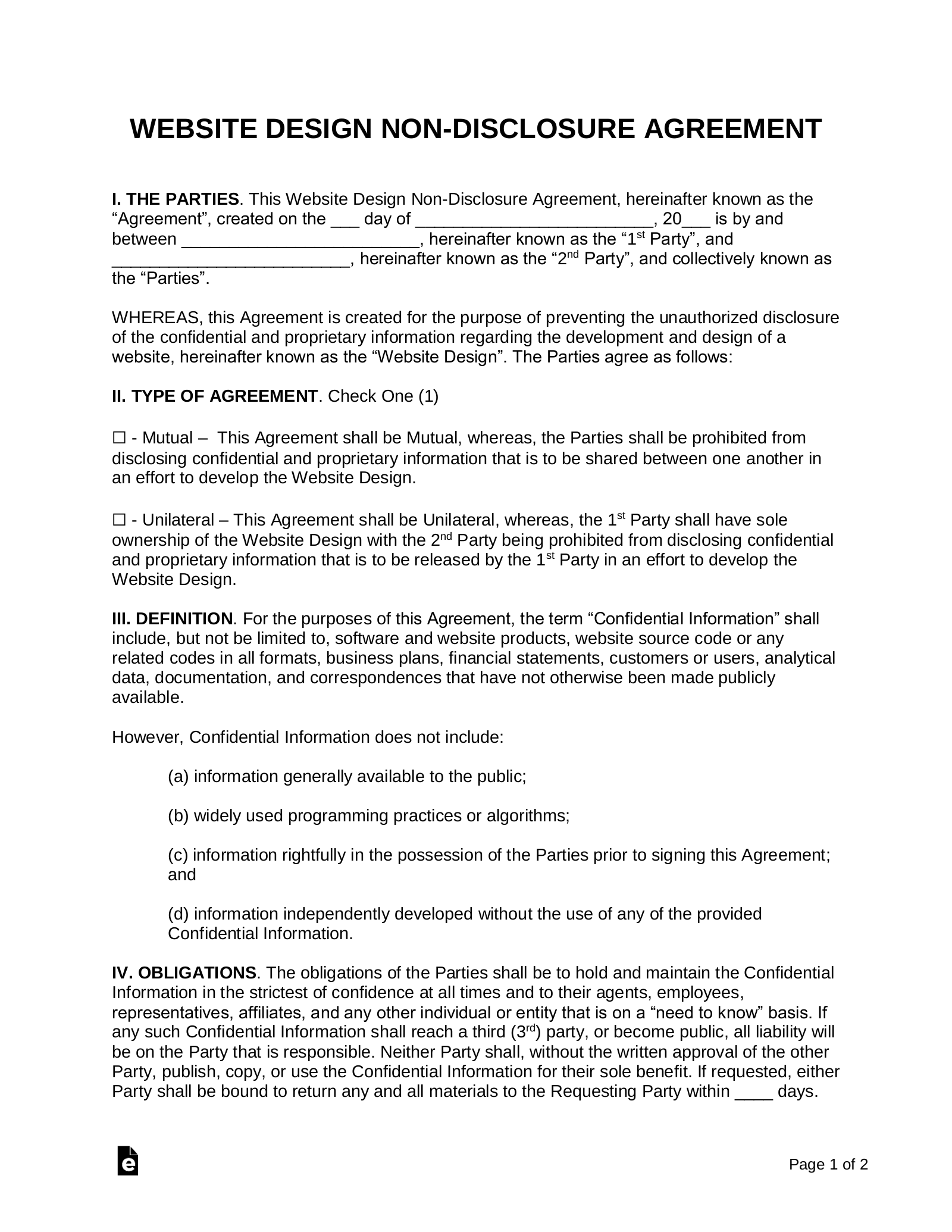
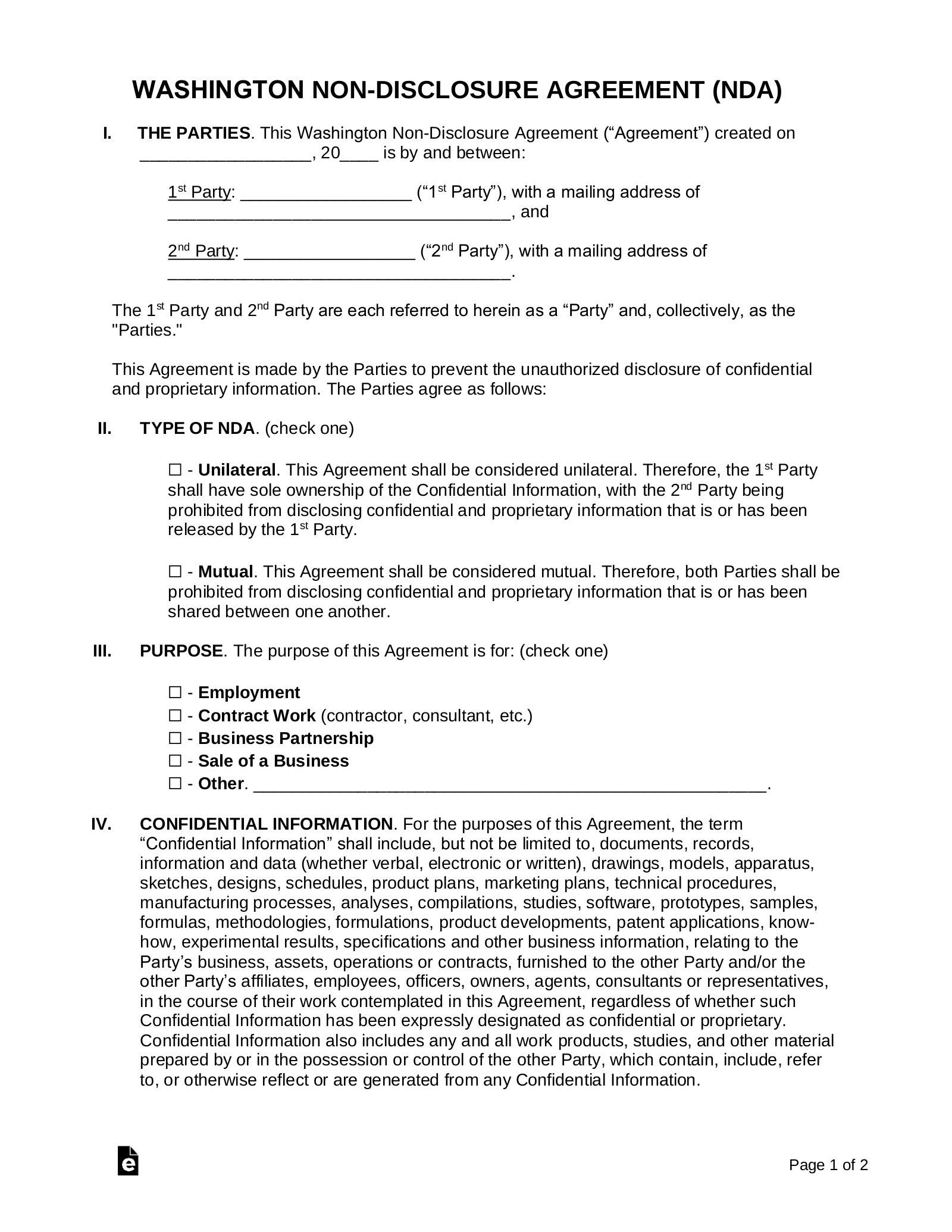
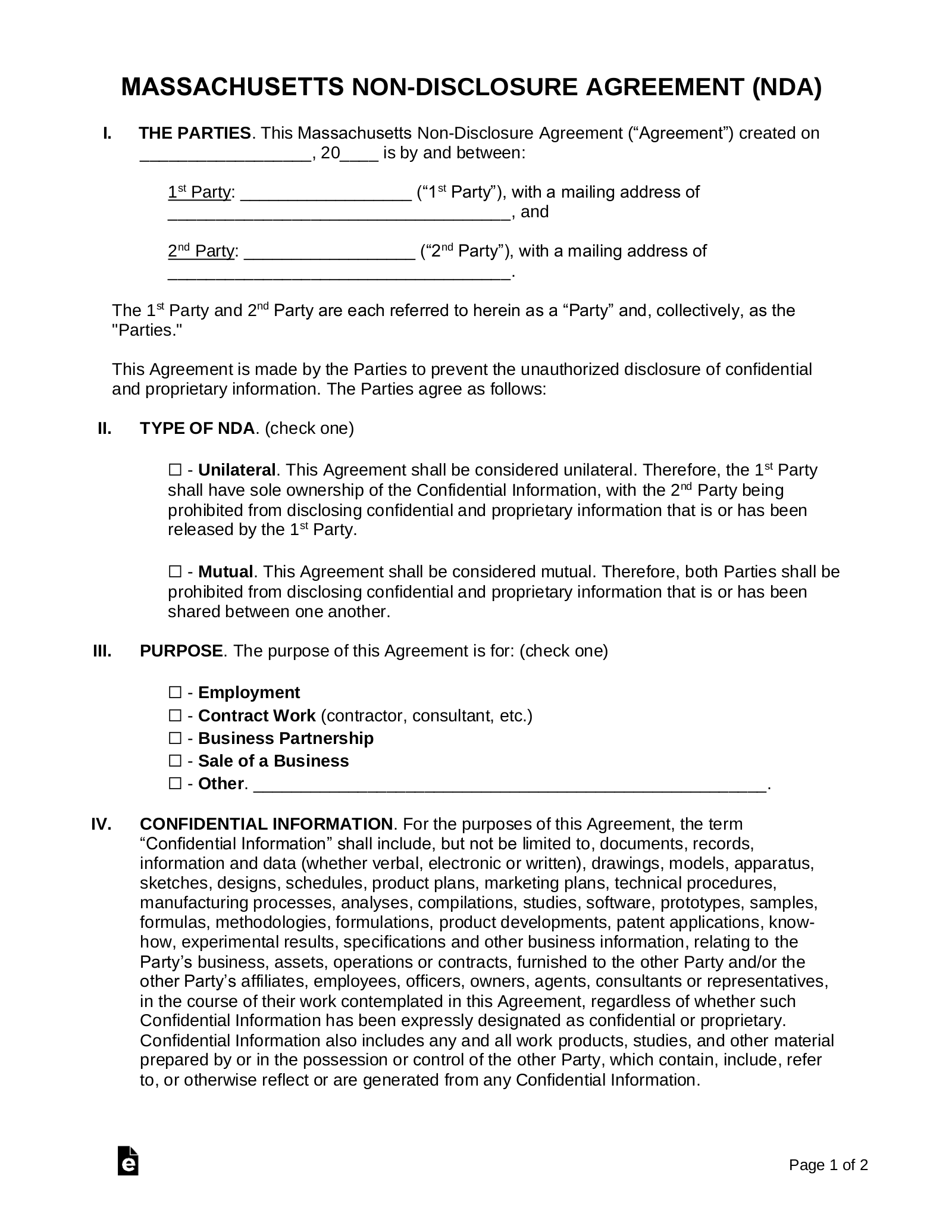
A corporate non-disclosure agreement is easiest to evaluate when its structure can be seen rather than considered only as abstract legal language. Useful examples show how parties are identified, how confidential information is defined, how permitted purposes are expressed, where exclusions appear, and how obligations and signatures are arranged. Comparing different NDA layouts can also reveal whether a document is one-way or mutual and whether it has been tailored to a particular business situation. These visual references are especially useful when assessing a legal corporate non disclosure agreement nda Template because they allow readers to compare document organization, clause sequencing, and the level of specificity used in different examples.
The following references focus on recognizable NDA and confidentiality-agreement formats rather than treating any single document as universally suitable. They illustrate mutual agreements, trade-secret agreements, business collaboration structures, and other corporate confidentiality layouts. Use them to understand the visual organization of an NDA, identify sections that may need customization, and compare how different sources present parties, confidential information, obligations, exclusions, terms, and signatures. The examples are reference material only; the appropriate wording for a particular transaction depends on the facts, parties, governing law, and information involved.
Mutual Non-Disclosure Agreement
Source: pdfFiller

Mutual Non-Disclosure Agreement for Joint Ventures
Source: Documentof
Mutual Non-Disclosure Agreement Template
Source: eForms
Trade Secret Non-Disclosure Agreement
Source: eForms
